

Office space management is not just about desk placement, it is about creating a productive environment for the employees and utilizing every corner. As businesses evolve, so do the dynamics of the workplace. The way office spaces are designed, organized, and utilized, profoundly impacts workflow, collaboration, and the well-being of employees.
Current trends in office space management focus on workplace flexibility, collaboration, and spacious office environment. This article explores the steps to implement effective strategies for workplace management, delving into best practices to optimize spatial resources, enhance employee experience, and align the physical environment of the office with the dynamic work culture of today. From steps to maximize office space potential to ways to design a modern workplace, read to know why strategic space management is important and how to achieve it.
What is office space management?
Office space management is researching, planning and optimizing the workplace in a way that every square inch of the space shines with potential and offers an inspiring environment. It uses tools for real-time data about space usage, available square footage, real estate costs, occupancy rates, along with other metrics to conduct forecasting.
This efficient space strategy can be applied to offices homes, storage facilities, etc., where the aim is to utilize and optimize space while avoiding clutter. The key to understanding workplace management is to get the best out of available resources. Since the workplace dynamic has shifted drastically to hybrid mode, it is important to implement key strategies to ensure effective space management.
Steps for optimizing office space
1) Analysis The initial step for workplace management is to understand your existing data. Take into account the current metrics such as:
- Technology used in space
- Total square footage
- Total workplace capacity
- Capacity of individual space
- Function of each area of office
2) Use tools to track Effective workplace management relies on real-time data and so, it is important to use the right tools to fetch that information. An integrated office facility management system can help you out with planning and implementing the workplace management strategy.
3) Ask the team In the end, it is the employees who make the workplace whole. So, it is important to include their thoughts and feedback to develop a good office facility management strategy. You can send a survey to employees and ask them questions like:
- How would they rate the workplace?
- Do you get support in your work?
- How can the office experience be improved?
- What is your biggest challenge when visiting the office?
4) Establish goals Now that you have the data and the feedback from staff, you can narrow down central objectives to optimize your space. Plan how you are going to achieve these objectives with the space you currently have?
5) Implementation After gathering all the insights and formulating a strategy, it is time to execute it. Effective office facility management is a continuous process and regular feedback is important to correct the deviations and create adaptive solutions.
7 Office Design Ideas To Boost Workplace Productivity
A collaborative and strategic office space planning can promote productivity, satisfaction, high-quality work and comfort across the workforce. Poor office design can lead to higher stress rate and decrease in productivity.
Below are 7 different design ideas to consider which can help you in redefining your workplace's efficiency.
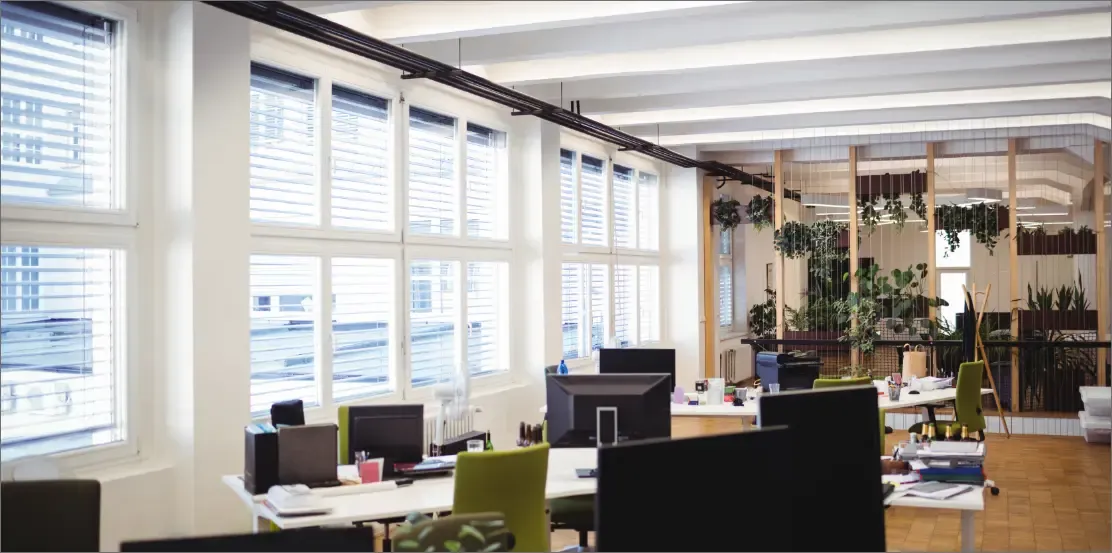
1. Open windows or use natural light bulbs Being indoors from morning to evening can get a bit tiring for employees. It is fruitful if an efficient office layout is designed in a way to allow natural sunlight to enter. If not possible, then you may reckon installing natural light bulbs that are said to omit natural light. This way, employees will feel more connected to the outside world and have suffer headaches because of florescent lights.
 2. Implement ergonomic office setup
Use furniture such as chairs and computer risers that can be adjusted to individual's stature and preference. Ergonomic office setup will help reduce any physical stressors for employees such as neck pain, back pain, etc., that can hamper workplace productivity.
2. Implement ergonomic office setup
Use furniture such as chairs and computer risers that can be adjusted to individual's stature and preference. Ergonomic office setup will help reduce any physical stressors for employees such as neck pain, back pain, etc., that can hamper workplace productivity.
3. Install sound canceling infrastructure Any kind of noise or sound can lead to a drop in productivity. Some employees need silence to thrive and, in that case, organizations should build sound-proof infrastructure or offer sound canceling devices to employees. Another option is to build some sound-proof cabins for private meetings or brainstorming sessions.
4. Designate multiple work spaces Depending on the work, different employees will have varied workspace preferences which can shift from day-to-day basis. It is advisable to create multiple office work spaces such as conference rooms, meetings rooms, breakout rooms, etc., so that the employees don't feel overwhelmed in an open space and can collaborate efficiently.
5. Keep snacks and beverages in hand When employees know that they can rest and have some refreshments any time of the day in office, they feel more productive. Keeping some snacks in hand like a vending machine or in the pantry so the employees don't have to get it from home or go out, is also a good way to maintain the productivity level.
6. Create a biophilic design Biophilic design means keeping plants indoor and allowing as much natural light to enter as possible. Surrounding the employees with the natural world can help them feel calmer and less stressed. Low-maintenance plants can be kept in different spots to create a sense of calmness in the environment.
7. Take your team's needs into account While doing office space planning, it is important to take into consideration the specific needs of your employees. For example, if you have several parents of young children, consider offering daycare facilities to reduce any child care related stress among parents. This will help employees focus on their work more without worrying about any other issues.
Summing Up
A creative and optimized workspace design can lead to agile, efficient, and productive work setting. Such office space utilization caters to the needs of the employees in this ever-changing work scenario. Nurturing collaboration, leveraging technological advancements, and taking care of staff needs are all elements of a successful organization and effective office space planning can help you achieve those.

