

AI is transforming every industry—but its impact on facilities and facility maintenance is quite revolutionizing. From automating mundane tasks to predicting potential maintenance issues ahead of time, AI in property management is paving the way for a new era of efficiency in facilities and building maintenance software.
For facility managers and building owners, integrating AI into operations no longer feels like an option, but a necessity to stay competitive, reduce costs, and deliver excellence.
This blog will explore how AI in property management is emphasizing the tangible benefits it delivers across six key areas, as well as the broader impact of artificial intelligence on the entire real estate sector.
Why AI is the new essential in facility management?
Facility teams face numerous challenges that are often rooted in outdated processes, disjointed data systems, and reactive maintenance approaches. Key pain points include:
- Manual and time-heavy onboarding processes
- Scattered, outdated asset data leading to inefficiencies
- Unplanned maintenance, resulting in costly downtime
AI addresses these challenges head-on, introducing efficiency and innovations that empower property managers to work smarter, not harder, especially when integrating AI in asset management strategies and leveraging capable building maintenance software solutions for day-to-day facility maintenance.
“The integration of AI tools isn’t just about keeping pace with change; it’s about setting the pace for excellence in building management.”
Top 6 Impacts of AI in Property Management
1. Automated Asset Onboarding with Image-to-Data Conversion
Manual entry of asset details is not only tedious but prone to human error. AI-powered image recognition tools can instantly convert photos of equipment and assets into structured data. Whether it’s serial numbers, specifications, or maintenance schedules, this information is accurately logged in centralized systems in seconds—streamlining processes for both facility maintenance and asset management in property operations.
Why it matters:
- Reduces time spent on onboarding assets
- Ensures 100% data accuracy
- Speeds up operational readiness
For example, tools like Sclera provide automated building maintenance software solutions to manage massive asset inventories with ease, advancing AI in asset management for facilities professionals.
2. Predictive Maintenance to Prevent Downtime
AI in property management unlocks predictive algorithms that analyze historical data from equipment and IoT sensors. By identifying patterns, AI can predict when components may fail, preventing costly emergency repairs and equipment downtime. Predictive AI is now a game-changer for proactive facility maintenance and asset protection.
How it helps:
- Eliminates reactive maintenance
- Extends the lifespan of assets
- Reduces maintenance costs significantly
“With predictive maintenance strategies, downtime becomes a rarity, not a norm.”
By adopting predictive AI solutions, property teams can tap into the impact of artificial intelligence to schedule repairs before issues escalate, boosting efficiency throughout the year.

3. Spatial Intelligence for Smarter Occupancy Planning
Struggling with underutilized or overcrowded spaces? AI-led spatial intelligence uses real-time data to evaluate occupancy trends, enabling smarter decisions around office layouts, desk-sharing policies, and hybrid work strategies. Incorporating AI in facilities, building maintenance ensures optimal resource allocation and smarter use of every square foot.
Key benefits:
- Improves space utilization efficiency
- Enhances tenant satisfaction by optimizing communal zones
- Adapts to changing occupancy needs over time
Spatial intelligence is just one of the many ways AI in asset management and building maintenance software drives strategic change across property management.
4. Anomaly Detection Using Sensor Data
AI tools continuously monitor sensor data to detect abnormal patterns related to energy usage, air quality, or building security. This early detection minimizes impacts before they escalate into full-blown problems, further demonstrating the impact of artificial intelligence on facility maintenance and building operations.
Examples of usage:
- Identifying unusual HVAC performance to avoid spikes in energy bills
- Spotting unexpected movements in secure areas with AI-driven surveillance systems
- Maintaining air quality by regulating ventilation systems proactively
This not only boosts building efficiency but ensures safer, occupant-friendly environments thanks to AI in property management and its solutions.
5. AI-Assisted Digital Inspections
Routine inspections are often labor-intensive and repetitive. AI-driven digital inspection platforms automate these tasks by analyzing visual data (like drone footage or 3D scans) to flag safety hazards, structural inconsistencies, or wear and tear. Digital inspections powered by artificial intelligence are raising standards in facility maintenance and AI in real estate.
Benefits include:
- Faster inspection timelines
- Improved compliance with regulatory standards
- Accurate identification of risks before failure
Tools like Digital Twin technology combine AI with real-time data to create virtual replicas of buildings, offering enhanced insights for inspections at scale. These innovations highlight the impact of artificial intelligence when combined with building maintenance software for predictive analysis.
6. Intelligent Ticket Routing Powered by AI
Managing service and maintenance tickets can become overwhelming, especially in larger facilities with diverse needs. AI improves ticket routing by analyzing historical trends, understanding priorities, and assigning tasks to the most suitable resources. Building maintenance software enhanced with predictive AI ensures the right work is done at the right time, maximizing efficiency in facility maintenance.
How this adds value:
- Accelerates response times
- Prevents delayed or misplaced service requests
- Enhances tenant satisfaction through proactive support mechanisms
For example, AI chatbots integrated with ticketing software are transforming reactive maintenance into an efficient, customer-first approach—a true testament to the impact of artificial intelligence on facility operations and the broad adoption of AI in property management and asset management.
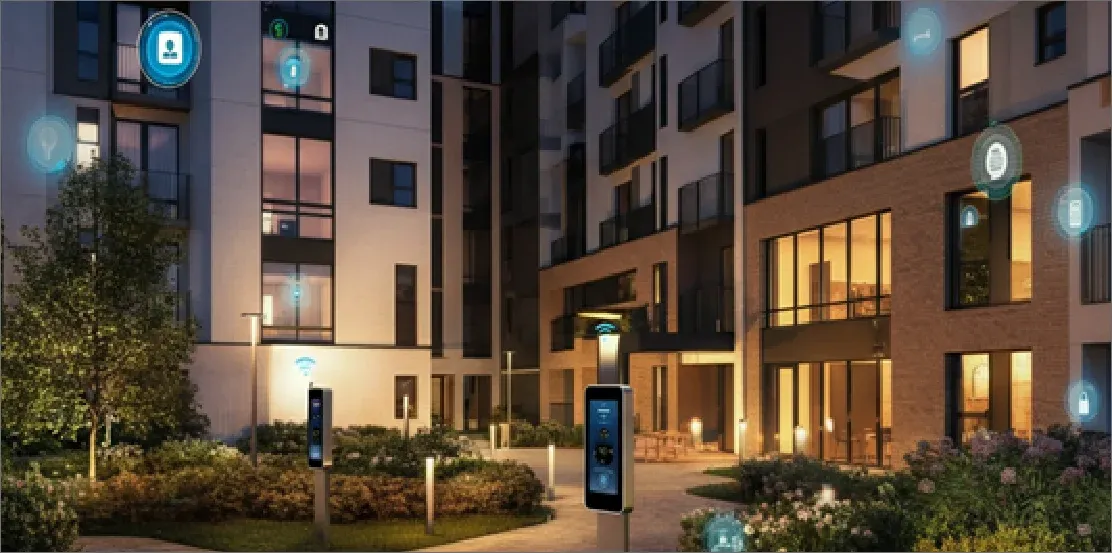
The broader benefits of AI in property management
Beyond these six functions, the integration of AI brings overarching advantages to property management, including:
- Energy Efficiency Improvements: AI analyzes consumption patterns to cut down unnecessary energy waste, benefiting both the bottom line and sustainability.
- Cost Savings: Automating tasks and boosting efficiency leads to significantly reduced operational costs for facility maintenance teams.
- Tenant Retention: Enhanced comfort, faster response times, and safer facilities contribute to high tenant satisfaction, reinforcing the value of AI in property management.
Getting started with implementing AI in your property
Integrating AI into property management doesn't have to be daunting. Here's how property managers can begin:
Assess Your Needs: Identify the areas of your property management system that are the most time-consuming or data-reliant and consider how facility maintenance, predictive AI, and asset management can be streamlined.
Choose the Right Tools: Look for solutions tailored to facility maintenance, building operations, and tenant management, including modern building maintenance software designed for flexibility and AI in asset mgmt.
Start with Small Wins: Begin with one AI-powered process like predictive maintenance or energy management to see immediate results from the impact of artificial intelligence.
Integrate Systems: Ensure your new AI tools can link with your existing systems to create a seamless operation flow, enhancing every aspect of AI in real estate, facility maintenance, and beyond.
Train Your Team: Empower your staff with knowledge about new AI platforms so they can use them to their fullest potential, leveraging building maintenance software and AI in asset management updates.
Facility managers who invest in AI now are not just solving today’s problems; they’re preparing for a smarter, more efficient future. Curious to see the impact AI can have on your building operations? Don’t wait to experience the transformation. Explore AI-powered solutions like Sclera tailored to your property’s needs and position your business for a smarter, more efficient future. Take the first step—innovate with AI!

