
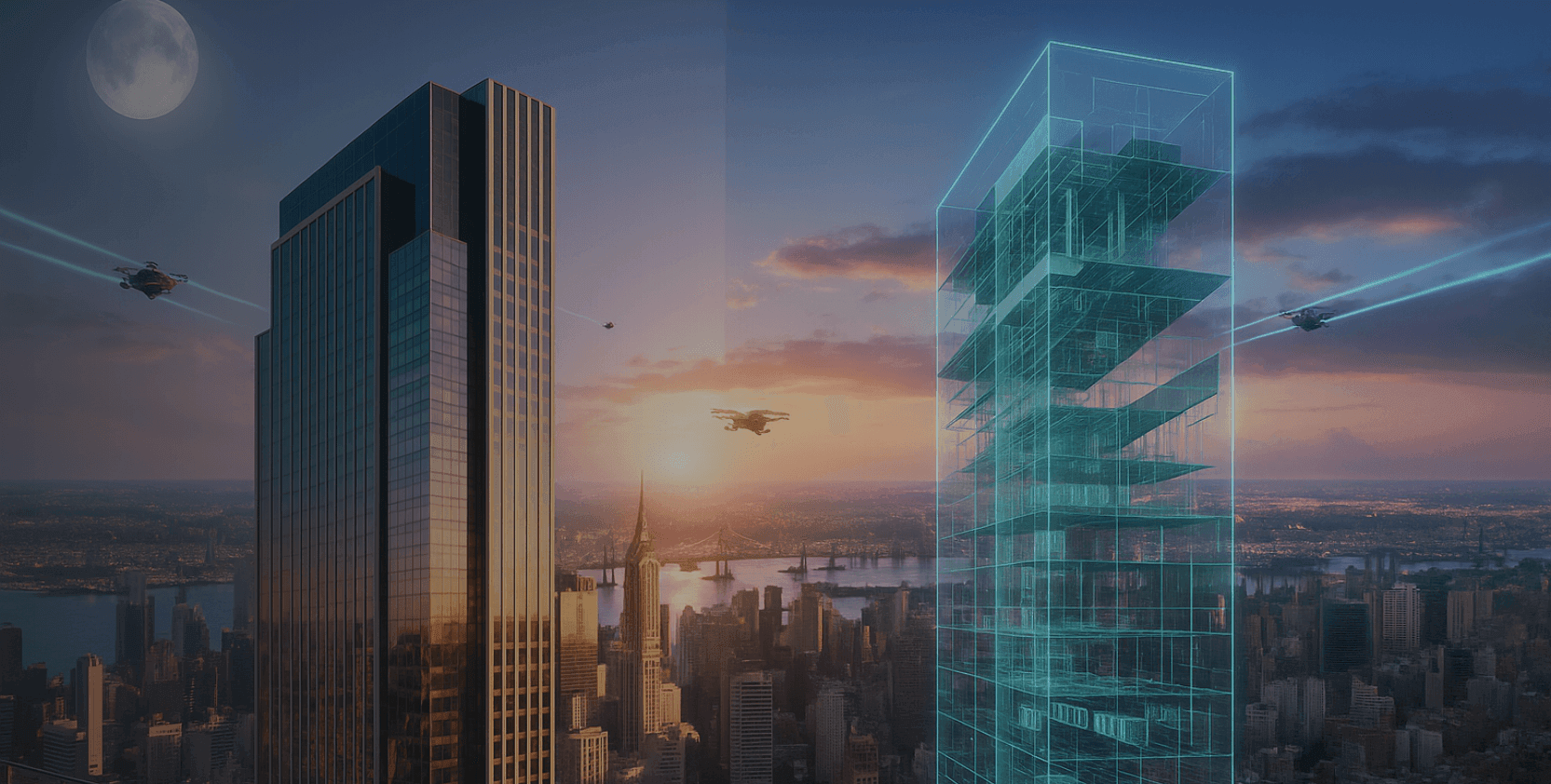
Visualize a building that learns, adjusts, and evolves in real-time scenarios. This is how digital twin technology manages and interacts with our physical spaces, creating a dynamic virtual replica of a building. By connecting a digital twin building to the physical structure, facility managers can move from a reactive to a proactive operational model. This capability transforms facility management, enabling smarter decisions that improve occupant comfort, boost efficiency, and extend the lifespan of critical assets.
Digital twin smart buildings imitate a living blueprint by not only mirroring a building's structure but also simulating its every function, from the hum of the HVAC system to the flow of people through its halls. Countless sources are challenging to track and integrate into a single hub. Digital twin technology draws information from Internet of Things (IoT) sensors, historical maintenance records, and complex performance models. Hence, a powerful tool for building operations optimization emerges, allowing for predictive simulations that can forecast issues before they arise.
Digital Twins: The Key to Peak Building Performance
The true strength of digital twin technology lies in its ability to create a comprehensive, data-rich ecosystem. It acts as a central nervous system, processing information from thousands of endpoints to provide a clear and actionable picture of building health and performance. This centralized intelligence allows for unprecedented levels of control and foresight.
Creating predictive simulations from integrated data
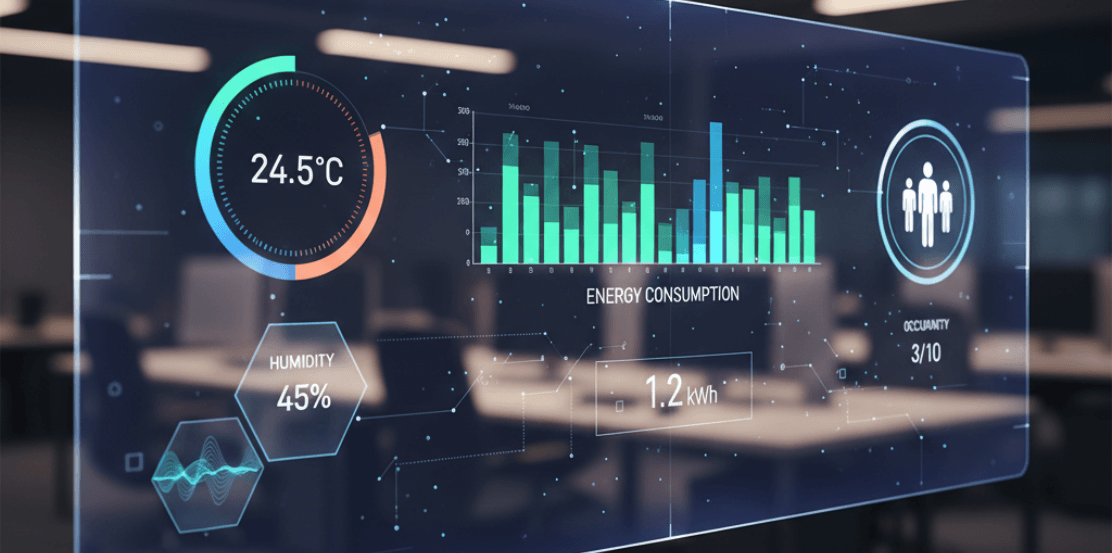 An image visualizing how digital twin technology processes real-time data from IoT sensors, showing metrics for temperature, energy use, and occupancy on a futuristic dashboard.
A digital twin building is much more than a static 3D model. It thrives on a constant stream of data from various sources to create a dynamic simulation environment.
• IoT sensor integration: In a digital twin building, IoT sensors act as the eyes and ears of the system, continuously feeding real-time data into the digital twin. These sensors monitor critical parameters such as temperature, humidity, air quality, occupancy, and energy consumption. By integrating this data, digital twin smart buildings create a dynamic, real-time representation of the physical environment.
This integration enables building operations optimization by providing facility managers with actionable insights. For instance, digital twin HVAC optimization uses sensor data to adjust heating, ventilation, and air conditioning systems based on occupancy patterns and weather conditions. This ensures optimal comfort for occupants while minimizing energy waste. The ability to monitor and respond to live data in real time makes IoT sensor integration a cornerstone of predictive maintenance digital twin strategies, allowing for smarter, more efficient building management.
• Maintenance log analysis: A digital twin building doesn’t just rely on real-time data; it also incorporates historical maintenance logs and equipment performance records to create a comprehensive operational picture. By analyzing these records, digital twin smart buildings can identify recurring issues, track the lifespan of critical components, and predict potential failures before they occur.
This predictive maintenance digital twin capability shifts maintenance from a reactive to a proactive approach. For example, instead of waiting for an HVAC system to fail, the digital twin can alert facility managers when sensor data indicates declining performance or wear. This not only reduces unplanned downtime but also extends the lifespan of expensive equipment, contributing to long-term building operations optimization. Maintenance log analysis ensures that every decision is backed by data, improving efficiency and reducing costs.
• Performance modeling: Performance modeling is where digital twin smart buildings truly shine, using advanced algorithms to simulate various scenarios and predict outcomes. By combining real-time IoT sensor data with historical records, digital twin buildings can run "what-if" simulations to test the impact of different strategies without disrupting operations.
For example, digital twin HVAC optimization can model how adjusting thermostat settings might affect energy consumption and occupant comfort. Similarly, performance modeling can help facility managers explore new office layouts or cleaning schedules to maximize space utilization. These simulations provide a risk-free environment to experiment with changes, ensuring that every decision contributes to building operations optimization.
The predictive maintenance digital twin capability also benefits from performance modeling, as it can forecast equipment failures and recommend the best course of action. This data-driven approach transforms building management into a strategic discipline, enabling smarter decisions that enhance efficiency, sustainability, and occupant satisfaction.
This fusion of real-time and historical data allows this technology to accurately forecast future states, turning building management into a strategic, data-driven discipline.
Enhancing efficiency and asset management
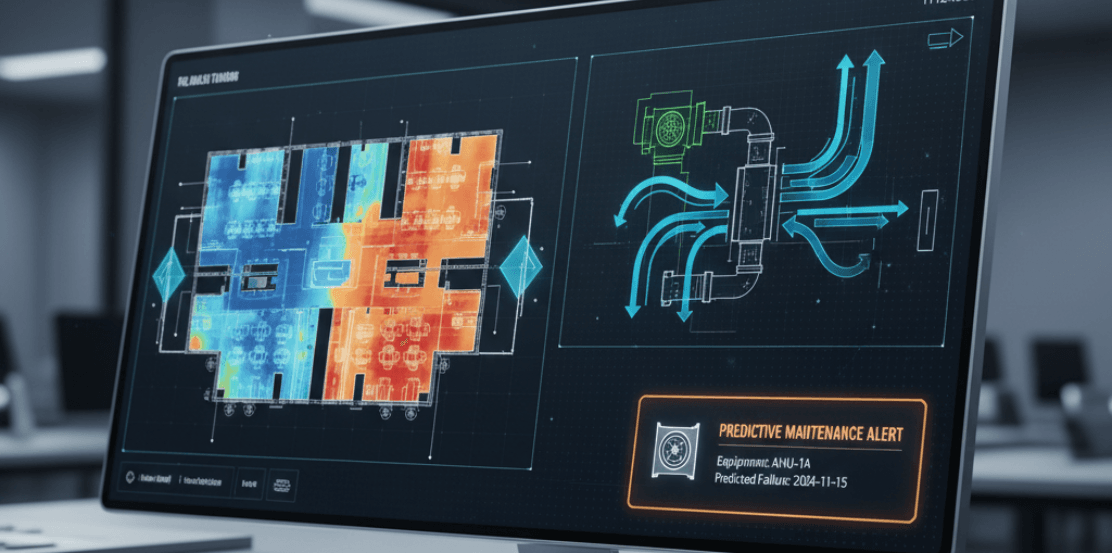 An image displaying a predictive simulation dashboard, which uses digital twin technology to optimize space utilization with heatmaps and improve asset management with predictive maintenance alerts.
The insights generated by these predictive simulations lead to tangible benefits across the facility. From saving energy to extending the life of expensive equipment, the impact is significant. • Digital twin HVAC optimization: Heating, ventilation, and air conditioning systems are among the largest energy consumers in a commercial building. A digital twin can analyze occupancy patterns, weather forecasts, and thermal performance to adjust HVAC operations in real time, ensuring comfort while minimizing energy waste. This granular control can reduce energy costs by up to 20-30%. • Smarter space utilization: By tracking how different areas of a building are used throughout the day, this type of technology can help organizations make informed decisions about office layouts, meeting room allocation, and even cleaning schedules. This ensures that every square foot of the facility is used effectively. • Long-term asset optimization: A predictive maintenance digital twin strategy shifts asset management from a fixed schedule to a condition-based approach. Instead of replacing a filter every six months, the system notifies you when sensor data indicates the filter is actually dirty. This extends the useful life of components, reduces maintenance costs, and prevents costly unplanned downtime.
Exercising the power of data-driven decision-making
Digital twin technology revolutionizes building management by transforming raw data into actionable insights. By integrating real-time IoT sensor feeds, historical maintenance records, and advanced performance models, digital twins offer facility managers a holistic view of building operations. This data-driven approach enables smarter, faster decisions that enhance efficiency, reduce costs, and improve occupant experiences. From predicting equipment failures to optimizing energy consumption, digital twins empower organizations to proactively address challenges and seize opportunities, ensuring exceptional performance and long-term sustainability.
Sclera's Role in Unifying Data Streams for Smarter Building Management
Modern buildings require efficient technology that complements contemporary infrastructure needs. Sclera plays a pivotal role in advancing digital twin technology for modern buildings. By developing platforms that intelligently unify real-time IoT sensor feeds, historical maintenance logs, and performance models, Sclera empowers facility managers to make proactive decisions.
Our solutions translate raw building data into actionable insights, enabling predictive maintenance, adaptive space management, and energy-saving strategies. Sclera’s expertise ensures that organizations benefit from a seamless, integrated digital twin ecosystem designed for greater efficiency, sustainability, and long-term asset optimization.
Smart Buildings Run on Digital Intelligence
As buildings become more complex and integrated with smart technologies, the need for a centralized control system becomes critical. Digital twin technology serves this exact purpose, acting as the intelligent core for modern facilities. It provides the visibility and foresight needed for effective building operations optimization, ensuring that structures are not only efficient and sustainable but also ergonomic and productive for the people inside them.
The adoption of digital twin smart buildings is picking up speed as organizations recognize the immense value in data-driven management. By merging physical and digital worlds, this technology unlocks new levels of performance and creates resilient future-centric properties.

