
Few names in modern architecture have the same profound resonance as Zaha Hadid's. Zaha Hadid, an Iraqi-British architect, left an indelible mark on the world of architecture with her innovative and groundbreaking designs. Hadid was a trailblazer and visionary, and her influence on architecture can be seen in the flowing forms, sweeping arcs, and innovative buildings she created. Being a pioneer in the area, Hadid pushed the bounds of traditional design, expanding the notion of what buildings may be. This piece explores the avante-garde spirit that defined best works by Zaha Hadid and looks at how Zaha designs continue to influence the field of modern architecture.
First, let us have a quick introduction about the architect.
Zaha Hadid is recognized for her impressive construction which are known for their soft curves and geometric shapes. Constructed from hard to work with materials such as steel, glass and concrete, these innovative architectures led to her nickname, ''the queen of the curves'', one of the many praises she received.
Hadid is a multi-award winner and the first woman to receive the RIBA Gold Medal, the Stirling Prize, and the coveted Pritzker Architecture Prize. Her influence on the world of architecture is irreversible. Her legacy continues to inspire a new generation because of the unconventional ways in which her inventive works defy expectations and shape the direction of architectural design.
5 Best Works By Zaha Hadid
1. The Heyder Aliyev Center, Baku, Azerbaijan
This marvelous piece of architecture was designed by Hadid architects in 2012, to symbolize development in the country after it got independence from the Soviet Union. This iconic creation stands as a testament to Hadid's ability to challenge the traditional rigid architecture of the Soveit union that is still prevalent in the country. The building's undulating, flowing form defies conventional geometric constraints, creating a sense of movement and fluidity.
This Zaha designs features exhibition spaces, a museum, a library, and concert venues. The Heydar Aliyev Center embodies the idea that future buildings can transcend rigid structures, embracing a more organic and harmonious integration with their surroundings. The Zaha design acts as a pioneer to the future of smart buildings concept, emphasizing the importance of seamless integration with the environment, breaking away from the rectilinear confines of the past.
2. Galaxy SOHO, Beijing, China
The Galaxy SOHO is a retail, office, and entertainment complex constructed by Zaha architects and is a striking specimen of her commitment to pushing the boundaries of architectural design. The complex is made from slabs of reinforced concrete, aluminum, glass, stone, and stainless steel. It is devoid of corners which reflect the traditional Chinese architecture where courtyards create an internal world of continuous open spaces.
The Galaxy SOHO complex, located in the heart of Beijing, is made up of four circular buildings with a total of eighteen stories connected by curved platforms, courtyards, and pedestrian bridges. The design encourages a sense of community and interaction, challenging the isolated nature of traditional building structures. According to Zaha's design ethos, the future of smart buildings ought to support people's connectivity and well-being in addition to being just utilitarian.
3. The Riverside Museum, Glasgow, Scotland
The Riverside Museum, housing the Glasgow Museum of Transport, is a prime example of Zaha's skill at skillfully fusing architecture and function. The glass building was constructed as an extension of the Glasgow Museum of Transport housing over 3000 exhibits about the city's transport history. The buildings' sleek, curved shape reflects the dynamic essence of transportation, which is an immersive experience for the visitors.
Zaha's design strategy is in line with the future of smart buildings since it emphasizes how crucial it is to create structures that both reflect and improve their intended purpose. By blurring the lines between form and function, Hadid's Riverside Museum prompts us to reconsider how future buildings can be more than static structures.
4. London Aquatics Center, London, United Kingdom
Zaha Hadid Architects created the London Aquatics Centre as part of the 2012 Summer Olympics, and it's a breathtaking example of modern architecture. Hadid's characteristic fluid and dynamic design language is on display in this water sports facility. In addition to being aesthetically pleasing, the sloping roof, which resembles a wave in motion, is essential for maximizing natural light and ventilation in the interior areas.
The Zaha design building thoughtfully integrates sustainable features to align with the smart buildings construction concept. The design maximizes energy efficiency, and the building incorporates advanced systems for water conservation and climate control.
5. Dongdaemum Design Plaza, Seoul, South Korea
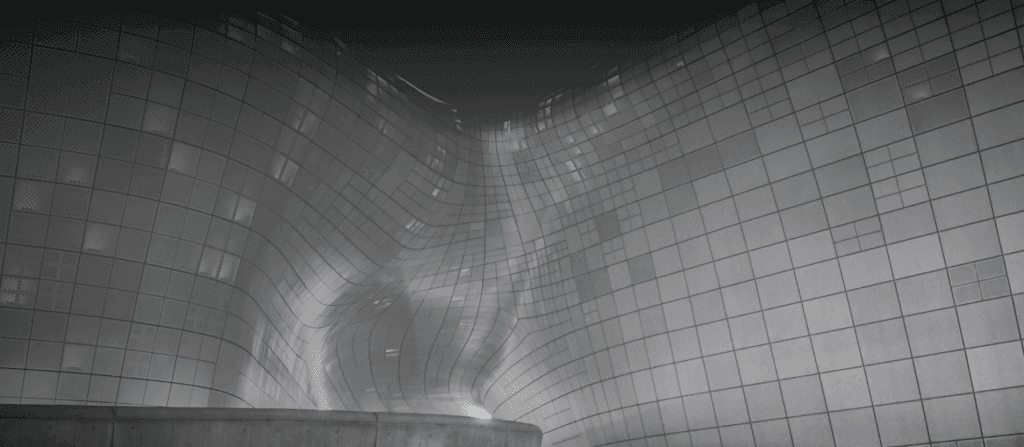
In the center of Seoul, the Dongdaemun Design Plaza (DDP) serves as a center for culture and design. Zaha's DDP design is distinguished by a sequence of connected, curved volumes that provide the impression of continuous flow. The flowing shape of the building makes it difficult to distinguish between inside and outdoor areas, creating a lively and welcoming atmosphere.
The Dongdaemun Design Plaza is an example of a smart building that uses technology to improve functionality and user experience. Advanced lighting systems, interactive displays, and effective climate control mechanisms are all integrated into the structure.
Associating Zaha Hadid's Creation & Smart Building Concept
 Zaha designs are some of the most celebrated structures in the world to this day. Also known as 'the queen of the curve' for her sleek and innovative architecture, her designs also align with the smart building concept in various ways.
Here's a look into how her architectural principles align with the future of smart buildings concept:
- Technology integration - Hadid embraced innovative engineering solutions and cutting-edge technology in her designs. Smart buildings leverage technology to enhance efficiency, sustainability, and user experience. Zaha's design approach aligns with the idea of seamlessly integrating technology into architectural design for both aesthetic and functional purposes.
- Sustainability focus - Zaha Hadid architects often incorporate sustainable features and environment conscious practices. Hadid's emphasis on harmonizing with the environment and using eco-friendly design elements resonates with the sustainability goals of smart buildings.
- User-Centric Design - Zaha designs often emphasize on user-experience that bring comfort along with the visually appealing design. Technologies like automated lighting, adaptive climate control, and personalized environments enhance the user-comfort which can also be seen in the Zaha designs.
- Dynamic and Adaptive Spaces - Structures designed by Zaha are fluid and organic and create a dynamic and engaging space. Smart buildings are made to adapt to the changing conditions which can be seen in Hadid's designs.
Architects and designers can develop intelligent, technologically advanced structures. These designs optimize efficiency and improve the overall human experience within the built environment by combining these ideas into the notion of smart building design. Hadid's architectural vision and smart building technology coming together opens the door to an architecture that is more user-centered, connected, and sustainable in the future.

