
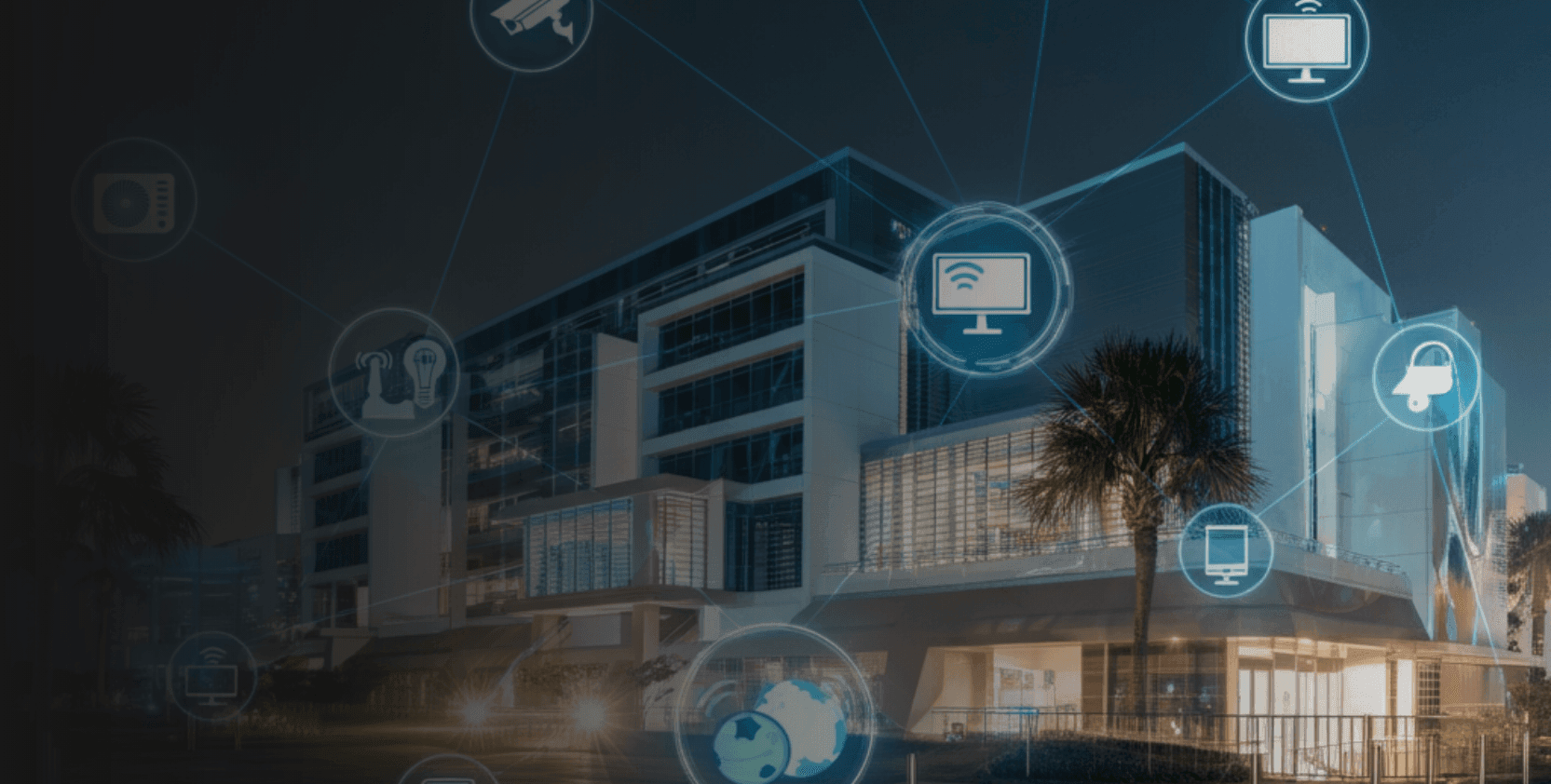
Modern buildings are powered by a web of connected devices—smart lighting, HVAC systems, cameras, and more. All these components play a critical role in smart building operations, but the growing overlap between IT and Facilities Management raises an urgent question:
Who truly owns device management?
As tech and infrastructure merge, the old boundaries fade. Without clear ownership, organizations face inefficiency, security risks, and confusion. In fact, research reveals that 70% of organizations have experienced at least one security incident from unmanaged devices. Today, effective device management is a collective, not individual, and responsibility. The evolution of connected device management is driving the need for new approaches—discover how your teams can bridge the gap below.
The ownership dilemma
Traditionally, responsibilities were siloed:
IT: Managed servers, networks, and cybersecurity
Facilities: Handled HVAC, building maintenance, and physical systems
But IoT changes everything. Consider a smart lighting system: it depends on network connectivity (IT) and supports energy efficiency (Facilities). If the lights malfunction, whose job is it?
Key points to consider:
- Lack of device management governance causes confusion and delays
- Tensions surface when roles overlap, leading to stalled problem-solving
- Without smart building accountability, no one acts with full authority
The result? Fragmented device management, unresolved issues, and wasted resources. When accountability is unclear, progress halts. Everyone assumes someone else is responsible—and nothing gets truly resolved.
The cost of siloed responsibility
When teams operate in silos, the consequences are real and costly:
- Downtime from unclear responsibilities
- Unpatched vulnerabilities and greater security risks
- Difficulty maintaining compliance
- Escalating costs due to redundancies and reactive repairs
A study found that buildings with fragmented device management can spend up to 25% more on maintenance and security.
More ways silos hurt connected device management:
- Teams remain stuck in a reactive mindset, only acting when things break
- Siloed tools offer incomplete visibility—making it harder to act fast
- Important updates and security patches are missed
Unified frameworks—like those offered by Sclera — help bring all device data together in one place, supporting true smart building accountability.
Why Shared Ownership Is the Key to Smarter, More Secure Buildings
 Shared accountability closes the ownership gap. Instead of asking “Who owns device management?”, forward-thinking organizations create a joint model where IT and Facilities collaborate for more efficient smart building operations.
A joint IT–Facilities approach delivers:
- Clear device management governance: Roles, responsibilities, and protocols are mapped and understood
- Centralized platforms: Shared dashboards give both teams a real-time view of every device
- Standardized processes: Consistent policies, updates, and security practices
Benefits of a centralized, collaborative approach:
- Overlaps are eliminated—everyone knows their role
- Issues are identified faster with unified monitoring
- Security improves through prompt, coordinated response
Platforms like Sclera make it possible to monitor, control, and automate devices from a single interface. For example:
- Smart sensors detecting anomalies trigger alerts for both IT and Facilities
- IT can patch vulnerabilities while Facilities checks hardware—nothing falls through the cracks
- Smart building accountability improves, supported by automated reporting and clear audit trails
Sclera empowers organizations to:
- Oversee assets and security in a single view
- Automate repetitive monitoring and maintenance
- Build resilience by bridging IT and Facilities efforts
The Playbook for Unified Device Management
Set your teams up for success with this step-by-step framework:
1. Map device ownership and technical dependencies
Start by creating a thorough inventory of all connected devices within your building—everything from HVAC controls and lighting panels to security systems and occupancy sensors. For each device, note its function, status, software version, and, most importantly, who is responsible for its operation, maintenance, and security. This complete map helps eliminate confusion, identify gaps, and ensures that no device falls through the cracks.
2. Create joint governance policies
Work collaboratively across IT and Facilities to establish clear, shared rules for device management. These policies should outline minimum security standards, timelines for software and firmware updates, and consistent procedures for vetting and onboarding new vendors. For example, both teams might agree that all new devices undergo a cybersecurity review, and that firmware is updated quarterly. Joint policies bring alignment, reduce risk, and support regulatory compliance.
3. Implement centralized monitoring tools
Adopt an integrated platform like Sclera to bring all devices under a single pane of glass. Centralized monitoring enables real-time tracking of device health, performance metrics, and security alerts—regardless of who "owns" each device. As an example, Facilities can see if a smart chiller is due for maintenance, while IT is instantly alerted to any signs of network intrusion.
4. Establish accountability loops
Define specific roles and responsibilities for both routine and emergency actions. Set clear processes: who patches vulnerabilities, who responds to alerts, who signs off on critical changes, and how tasks are tracked from start to finish. Hold regular cross-team reviews to audit completed actions and assess where processes can be improved. Consistent accountability builds operational trust and reduces finger-pointing when issues arise, strengthening smart building accountability.
5. Automate wherever feasible
Leverage AI and automation to handle repetitive tasks such as device monitoring, data collection, and incident response. For instance, AI-powered platforms can automatically flag unusual activity, trigger alerts for overdue updates, or even deploy fixes without manual intervention. Automation minimizes human error, accelerates response times, and allows both IT and Facilities to focus on higher-value work.
This structure ensures:
- No one is left guessing about responsibilities
- Efforts are focused and efficient
- Trust grows between IT and Facilities teams
Conclusion
The future of device management rests on collaboration—not competition—between IT and Facilities. Shared ownership, robust device management governance, and solutions like Sclera device management are the blueprint for safer, smarter, and more efficient smart building operations.

