
Imagine trying to keep track of hundreds—maybe thousands—of assets scattered across your organization: servers humming in data centers, IoT sensors tracking building environments, and OT machinery critical for daily operations. It’s like juggling spinning plates, each demanding attention and speaking a different language. As technology weaves deeper into business, the complexity only grows.
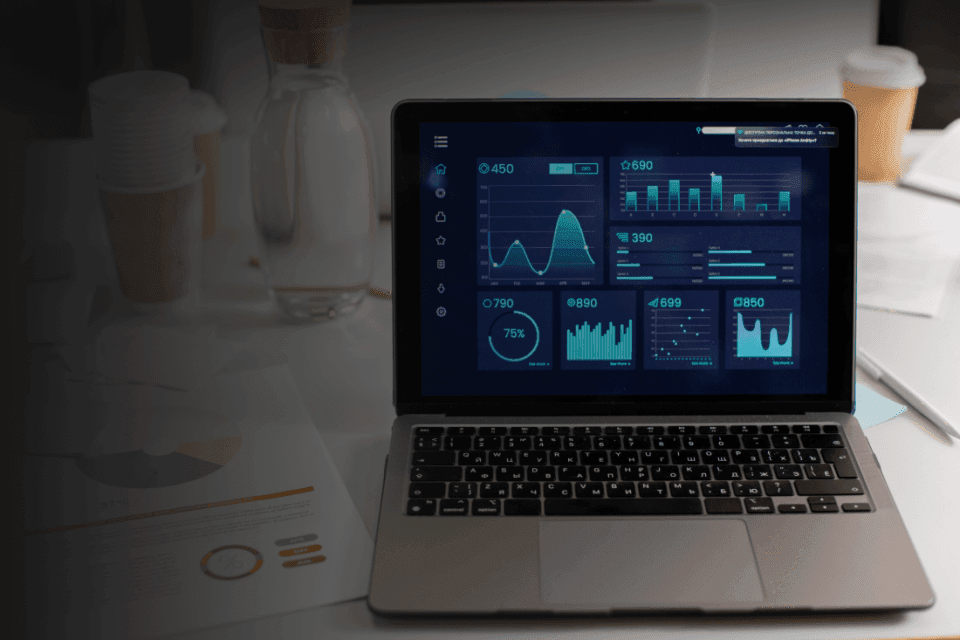
That’s where unified dashboards come in. They’re more than just screens with charts; they're your command center, bringing all your IT, IoT, and OT assets into one clear, actionable view. For IT leaders, CXOs, or facility managers, having this unified perspective means faster decisions, fewer surprises, and a lot less stress.
Ready to see what happens when you break down the barriers between IT, IoT, and OT? Here are five ways unified dashboards are changing asset management for the better.
Key takeaways:
A unified view breaks down IT/OT/IoT silos and boosts monitoring.
Embedded analytics and AI dashboards turn raw data into actionable insights.
Digital twin technology and automation streamline workflows.
AI anomaly detection and governance improve security and compliance.
Predictive maintenance and operational intelligence lower costs and raise ROI.
5 Ways Next-Gen Dashboards Reshape Asset Visibility
1. Breaking Down Silos with a Unified View
Disconnected systems keep teams in the dark—IT, IoT, and OT assets often go unmanaged outside their own silos. Unified Dashboards for Asset Management bring together data from across your ecosystem, making the invisible visible.
What a unified view enables:
Imports and normalizes diverse data (CMDB, BMS, SCADA, MES, cloud), offering a consistent look at asset health, location, lifecycle, and risk.
Enables real-time data quality monitoring, with events and alarms streaming onto a single timeline, giving instant context and reducing time to resolution.
Role-based dashboards provide targeted insights for IT, facilities, or operations, all drawn from the same source of truth.
Result: Clear accountability, faster mean time to detect (MTTD), and coordinated, cross-domain problem solving.
Stat: 40–60% of enterprise data resides outside traditional IT systems. Unifying dashboards surface the “hidden half,” improving visibility across IoT and OT.
2. Enhancing Decision-Making Through Data Insights
Data isn’t valuable until it becomes insightful. With embedded analytics and AI dashboards, unified platforms turn your asset sprawl into clear, actionable intelligence.
What this looks like:
Embedded analytics visualize patterns—failure clusters, firmware issues, impacts of operating temperature, etc.—all without bouncing between tools.
AI dashboard capabilities spot anomalies in utilization, power consumption, or abnormal behavior, and recommend next steps.
Real-time data quality monitoring flags incomplete or delayed feeds, safeguarding downstream decisions.

Example: If a motor’s vibration spikes, analytics compare baselines and context so the AI dashboard can recommend the best action—avoiding overreactions or missed warnings.
“Analytics should reduce decisions, not increase them. The right dashboard removes noise and elevates the next right action.” — VP of Operations, global manufacturer
3. Streamlining Operations and Workflows
Unified dashboards accelerate the path from detection to resolution with automation, edge computing, and digital twin technology
Here’s how:
Edge computing brings analytics closer to devices, cutting latency and making it possible to act instantly crucial for many OT environments.
Digital twin technology allows teams to safely test “what-if” scenarios before making changes in the real world, reducing risk.
Automation rules workflows: the dashboard can trigger maintenance, isolate devices, adjust parameters, and record events—all in one flow.
Real-world benefit: A dashboard detects a bottleneck on a production line, digital twins test adjustments, and then the system applies the change, all while tracking the outcome.
4. Improving Security and Compliance
The more connected your assets, the broader your attack surface. Unified dashboards shine a bright light on vulnerabilities and audit trails, bolstering your security posture.
Key benefits:
AI-powered anomaly detection learns what’s “normal” for your network, pinpointing subtle security threats as they develop.
Centralized governance applies and tracks security policies, patches, and configuration changes across IT, IoT, and OT domains—making compliance less painful.
Vulnerabilities are mapped to business risk, and remediation is scheduled to align with production needs, minimizing disruptions.
Compliance reporting: Unified dashboards offer comprehensive trails and real-time monitoring, which is essential for frameworks like ISO 27001 or NERC CIP.
“You can’t protect what you can’t see. Unifying asset visibility is the foundation of cyber resilience across IT and OT.” — CISO, energy utility
5. Driving Cost Efficiency and ROI
Visibility isn’t just for peace of mind—unified dashboards help protect your bottom line with operational intelligence and predictive maintenance.
How savings add up:
Predictive maintenance uses data streams (vibration, error codes, power) to predict breakdowns and schedule repairs—cutting costs, shrinking downtime, and extending asset life.
Operational intelligence uncovers process inefficiencies, letting teams make smart trade-offs—like shifting loads for energy savings or automating repetitive tasks.
Reducing point solutions lowers licensing and training costs, freeing staff to focus on impactful work.

ROI in action: Just five hours less downtime at $20,000/hour saves $100,000 annually. Add energy savings and fewer emergency repairs for a strong payback.
Stat: Predictive maintenance can cut downtime 30–50% and extend asset life up to 40%.
Make Unified Visibility Your Operating System
IT, IoT, and OT are connected more than ever. Unified Dashboards for Asset Management deliver a complete picture, so you make fast, confident decisions—breaking down silos, powering embedded analytics and AI dashboards, streamlining tasks with digital twin technology and edge computing, improving security, and delivering measurable ROI.
Next steps:
Inventory your assets and prioritize key data sources.
Pilot a unified dashboard with clear metrics (uptime, energy use, compliance).
Carefully automate workflows and monitor data quality for long-term accuracy.
Ready to move from fragmented oversight to a single source of truth? Explore Optima, powered by Sclera, a next-gen AI powered asset management tool that provides a unified dashboard purpose-built for complex IT, IoT, and OT environments. The platform empowers IT heads, CXOs, and facility managers to break down silos, gain operational intelligence, and future-proof asset management.

