
The digital age has led the way to exceptional technological advancements, transforming the way industries operate and manage their businesses. Among the innovative marvels of technologies such as artificial intelligence which has reshaped every industrial landscape. The Industrial Internet of Things (IIoT) stands at the foremost.
This new-age technology revolutionizes the concept of inter-connectivity and empowers industries to optimize operations and IIoT enables you to utilize the potential of data like never before. IIoT harnesses the capabilities of interconnected automation sensors and devices and this dynamic fusion of industries with new-age technologies has become the face of the new-age industrial revolution. At its core, IIoT leverages businesses by transforming their operational models and improving performance.
What is Industrial IoT or Internet of Things?
The term IIoT is often used interchangeably with Industry 4.0 or Industrial Internet of Things. However, these terms have slight differences between them. IIoT refers to the use of IoT technology which is a network of interconnected devices such as sensors and smart devices to collect and exchange data between them.
Within the domain of IoT, a distinct paradigm unfurls, known as the Industrial Internet of Things (IIoT), wherein the focus pivots resolutely toward the industrial spectrum. IIoT engenders a transformative interlacing of physical devices with the fabric of industries, constituting an intricate lattice that acquires real-time data emanating from the ecosystem enveloping these devices
For illustrative purposes, consider the deployment of Industrial Internet of Things (IIoT) devices within industrial sectors. These devices assume the mantle of sentinels, diligently overseeing the labyrinthine pathways of supply chains while effectuating remote surveillance of operational dynamics. In tandem, they effectuate the seamless orchestration of maintenance protocols, engendering a premeditated circumvention of potential equipment maladies and concomitant downtime.
Sensors and actuators
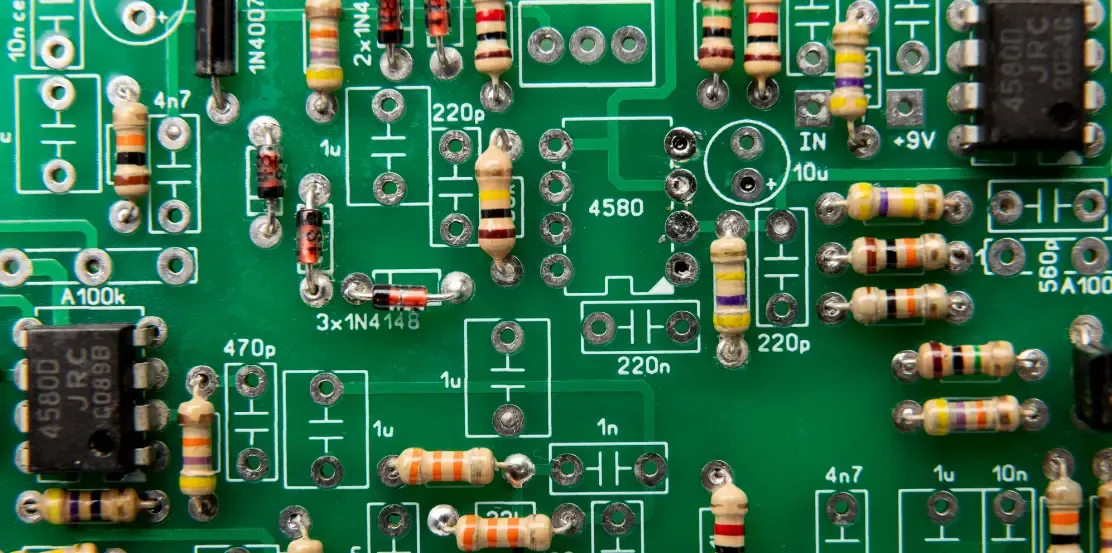
At the very core of the Industrial Internet of Things (IIoT) lie the pivotal components of sensors and actuators. Sensors play the role of collectors, gathering real-world data that offers a glimpse into the tangible realm. These adept devices specialize in the detection of multifarious parameters, ranging from temperature and humidity to pressure.
Essentially, sensors serve as conduits for transforming the physical world into data, fashioning a bridge between the palpable and the digital. Together, sensors and actuators become the vanguards of predictive maintenance and operational oversight, orchestrating a symphony of efficiency and excellence within industrial domains.
Cloud Computing and Edge Computing
Cloud Computing and Edge Computing are 2 components in the context of IIoT as a vast amount of data generated by IIoT devices requires huge storage and processing power which can be easily provided by cloud computing and cloud platforms offer scalability features that can be beneficial for the Industrial internet of things.
Cloud computing eliminates the concept of physical storage and servers for IIoT devices while improving productivity and providing insights into operations using real-time data.
Big Data Analytics and AI/ML Integration
Big data Analytics allows IIoT industries to process and analyze the vast amount of data in a very minimal amount of time and provide accurate results which include patterns, trends and these can help optimize operation processes while industries can predict maintenance needs using big data analytics.
AI/ML integration is used to help industries automate their business operations. IIoT industries can harness the power of AI/ML technologies to efficiently use their resources and automate most of the physical tasks in IIoT environments which can reduce costs and improve safety in industrial spaces while industries can focus on their strategic activities.
These are just some of the key technologies that enable IIoT. As IIoT continues to develop, we can expect to see even more innovative and groundbreaking technologies emerge.
Top 10 industries using the Industrial Internet of Things (IIoT)
1. Manufacturing industry
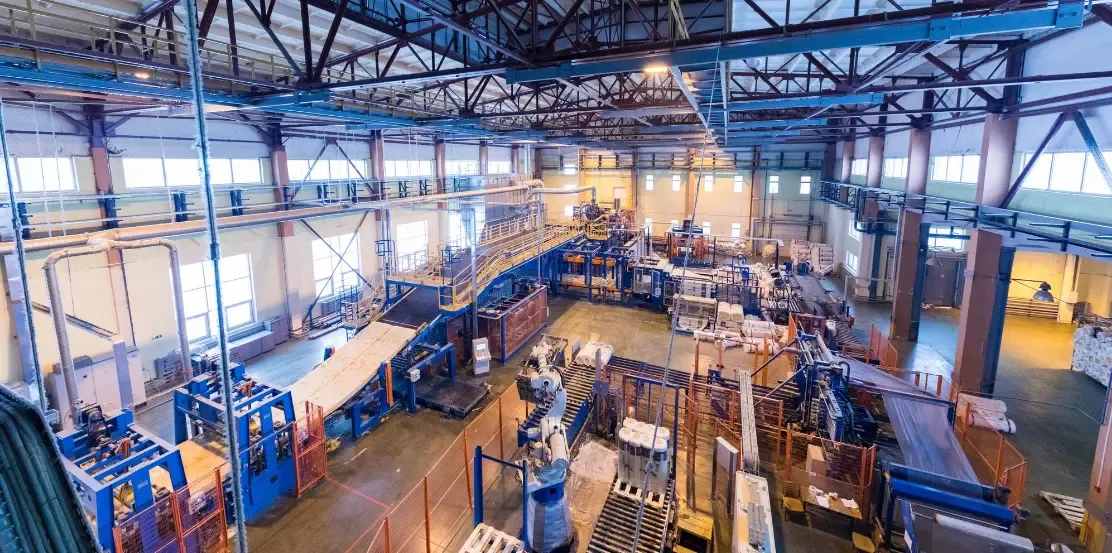
The manufacturing industry uses heavy machinery and equipment that needs constant monitoring which is easily achieved by IoT devices. IIoT technologies can revolutionize the way manufacturing operations are managed. IIoT has the potential to effectively optimize production and increase profits.
Industrial IoT stands at the forefront in the manufacturing industry as IoT devices transform industries using data-driven decisions. Quality control is a crucial part of the manufacturing process where IoT can significantly monitor and validate quality checks, identify issues early on and take actions before they even tend to occur.
Manufacturing industries are prone to accidents all the time which can sometimes be fatal this can be avoided or at least prevented using IIoT solutions as workers' safety is important at the workplace and industries can be integrated with sensors that can track worker movements and constantly monitor environmental conditions which can reduce the risk of accidents and increases overall workers efficiency.
2. Energy and utilities
The energy and utilities sector is leading the global push for sustainable energy management. As the demand for energy consumption is increasing parallelly environmental concerns are also on the rise and IIoT has emerged as a tool to balance this gap by leveraging IIoT to optimize resources and create a better sustainable future. Smart grid is one of the features where Industrial IoT uses advanced sensors and monitors electricity consumption, which helps in detecting energy flow, and balance supply leading to improved grid stability.
IIoT helps in improving energy efficiency by reducing energy consumption and increasing reliability by constancy tagging equipment that can help prevent outages. IIoT collects all this data and one can get a comprehensive view of energy consumption and distribution facilities. IoT devices collect parameters, allowing industries to comply with regulations and minimize their ecological footprints.
IoT empowers consumers and provides them with insights into energy consumption using smart meters where consumers can make informed decisions which leads to greater energy efficiency for end-users.
3. Transportation and logistics
The transportation and logistics industry is benefiting greatly from IIoT where IoT-enabled devices are helping in tracking, and monitoring the movement of products which enables efficient operations.
Industrial IoT enables tracking of cargo using GPS devices to precisely locate information providing visibility and reducing the risk of lost shipments. These sensors gather real-time data on vehicle movement, fuel, driver behavior, and location. This data can be used to improve transportation and reduce fuel consumption by adjusting routes while optimizing engine performance.
Logistics involves transporting perishable products which require constant monitoring of temperature, and humidity to make sure the goods remain in desired conditions and avoid damage to goods to maintain quality. IoT devices can be used by consumers as well where logistics can provide real-time updates on shipments which helps users to track the progress of their shipments effectively.

4. Agriculture and farming
Over the annals of human history spanning mass centuries, the substructure of sustenance and essential resources has invariably rested upon the high-yielding terrain of agriculture and the agricultural industry.
The data harvested from this orchestrated symphony of sensors and monitoring systems converges into a digital repository, a virtual store wherein optimization lies concealed. This narrative spread out against the backdrop of an emerging digital repository, a bastion of insights that empowers agriculturists with the impetus to re-calibrate practices and mitigate resource wastage It affords agriculturists the privilege of re-calibrating their practices based on empirical evidence, thereby steering clear of resource profligacy and minimizing wastage.
Farming also includes livestock management, which can be automated using IoT where sensors can efficiently monitor livestock and track their movements. IoT uses various sensors such as soil moisture trackers, and temperature sensors, and data collected by these industrial IoT sensors is then fed into AI/ML models to predict crop yields and identify patterns.
5. Healthcare and medical devices
The Industrial Internet of Things (IIoT) has emerged as a game-changer for the healthcare industry from tracking patient records to monitoring medical equipment remotely which delivers better outcomes IIoT can improve the safety of medical devices by monitoring the performance of devices and identifying issues even before they cause harm to patients. Smart IoT devices are extensively used which are wearable devices that track your vital signs and provide reports on them using sensors embedded into these smart wearables.
IIoT can be used to optimize hospital operations by constantly collecting data by industrial IoT sensors which helps to improve overall efficiency. IIoT technologies use vast amounts of data that is used to predict disease progress and create personalized treatment plans and IIoT also acts as an alert device. For example, if a patient's temperature crosses a certain level it alerts staff. this could avoid accidents and injuries.
6. Construction and infrastructure
Within the intricate tapestry of modern industrial operations, the Industrial Internet of Things (IIoT) spread out its technological wrap, characterized by an assemblage of sensors and diverse devices that engage in data acquisition from the corporeal realm. This harmonic convergence not only encompasses the gathering of sensor-derived data but also extends to the meticulous geospatial orchestration of equipment, a facet that serves as the pivot upon which the pursuit of efficacy pivots.
Moreover, within this repository of insights, the seeds of prognostication find fertile ground. Potential delays, once obscured by the veil of uncertainty, emerge into the fore as tangible blips on the operational horizon.
The vanguard of Internet of Things (IoT) devices presents a fabric interlaced with the intricacies of remote surveillance, a panorama wherein construction sites become digitally interconnected domains, and their narratives decrypt distantly. his, in turn, capacitate them to capably re-calibrate strategies, as they possess the keys to unlock insights that resonate with a resonance related to insight.
7. Aerospace and aviation
Industrial IoT sensors can be integrated into airports which are used to monitor and track passengers and industrial IoT sensors such as GPS trackers are being extensively used in cargo movements, which are provided to end users to track their cargo easily. This vast data collected by IIoT can be used to make informed decisions such as directing flight routes, and aircraft operations. IIoT enables a better customer experience by providing in-flight entertainment options.
IIoT promotes sustainability by constantly monitoring fuel consumption and operations of the engines for example. Airbus uses IIoT to monitor the performance of engines and the company has integrated multiple industrial IoT sensors that collect engine temperature, and vibrations which are used to efficiently maintain and prevent any unexpected breakdowns. Another company, Boeing, uses IoT devices to track the fuel consumption of their flights and optimize flight paths to reduce fuel costs.
8. Mining and extraction industries
Mining industries for years have been using outdated and legacy technology systems which resulted in inefficiency but now the mining industry has been transformed using IIoT where outdated technologies have been replaced by cutting-edge industrial IoT sensors and monitoring systems helping mining industries to get a better view of landscapes and tunnels like never before.
The industrial Internet of Things can assist in exploration by providing information on geological conditions. This data-driven approach helps to identify areas for exploration with ease.
Industrial IoT promotes safety measures by tracking workers' movements and easily avoiding any potential hazards. IoT devices can optimize the energy consumption of equipment in the mining industry by tracking their performance, reducing the environmental impact of mining and promoting the net-zero concept.
For example, RIO Tinto uses IoT to deal with production schedules and the company has industrial IoT sensors installed on their equipment to collect data on energy consumption which benefits from reduced costs.

9. Oil and gas industry
The oil and gas industry plays a crucial role in producing and moving natural gas. This sector is quite intricate and faces various challenges in finding new ways to meet the global energy demand.
The Industrial Internet of Things (IIoT) steps onto the stage to transform the oil industry. It does so by incorporating smart devices that gather important data from operations. This data, in turn, helps industries optimize their strategies for getting the most out of oil and gas fields. The essence of IIoT lies in reshaping how oil industries operate, accomplished through the assimilation of industrial IoT sensors and advanced analytical tools.
Oil industries implement energy-saving methods to reduce greenhouse gasses and IIoT automation devices help in smart drilling operations where data from industrial IoT sensors provide geological conditions enabling drillers to act accordingly to the parameters detected that assist in evaluating their feasibility.
10. The retail and supply chain management industries
The Industrial Internet of Things (IIoT) has the potential to work its magic in the retail and supply chain) management domains. It accomplishes this feat by bringing the entire supply chain into clear view, allowing a comprehensive perspective from beginning to end. With IIoT, you can keep tabs on shipments, trace the movement of transportation, and streamline the overall process, all while sidestepping potential disruptions.
IIoT sensors ensure that goods are stored in a safe environment in controlled conditions which is crucial for perishable products and maintains product quality. IoT sensors track the supply chain management in real - time where predictive maintenance helps reduce costly breakdowns and downtime while ensuring smooth operations.
Conclusion :
The Industrial Internet of Things (IIoT) is a revolutionary technology that focuses on transforming traditional old methods to more advanced ones using the power of modern-day technology. The above-mentioned industries harness the IIoT to optimize processes, and monitor assets and IIoT enables real-time data monitoring which leads to increased productivity, and safety. IIoT's ability to analyze data has made businesses rapidly evolve and stay ahead of the competition.
IIoT has proven to be a new age industrial revolution that has opened new avenues for growth, sustainability, and promoting quality of life around the world yet connecting these devices is a complex process and time-consuming task.
We at Sclera provide effective solutions for facility management and IoT solutions that help your business to thrive and our team of experts will guide you towards integrating IoT into your industries organized and efficient way. Contact Sclera today to join the new world of the industrial revolution and create a better future after all.

