
The importance of efficiency and functionality in the fast-paced field of facility management makes an organized approach to maintenance essential. As the maintenance is increasing, tracking what needs to be done and when is also getting difficult. A well-designed facility maintenance checklist emerges as a cornerstone for achieving proper upkeep, offering a systematic and proactive strategy to address the diverse needs of a facility.
A facility maintenance checklist outlines the frequency of inspections required for each area of your facility and assists the teams to be on top of every chore. Managers who follow building maintenance checklists discover that their staff responds to fewer reactive maintenance requests and that their assets and equipment last longer. In this blog, we will understand what goes into a facility maintenance checklist, what is its importance and how can building management software help in automating checklists and simplifying building maintenance.
The Importance of Facility Maintenance Checklist in Ensuring Proper Upkeep
In most industries, the cost of maintenance is between 10 and 25 percent of total operating costs. Maintenance efficiency is an important factor in this as typically more than half the cost is labor. Improving maintenance efficiency positively impacts reliability—so companies can cut costs without risking performance.
Here is how a building maintenance checklist is important for businesses:
Preventive maintenance: Using a preventive maintenance checklist makes it easier to put preventative maintenance into practice and deal with possible issues before they become expensive. Unexpected breakdowns are less likely when routine inspections and timely maintenance are performed.
Efficiency and productivity: You may increase overall productivity and optimize your maintenance activities by following a systematic facility maintenance checklist. It enables efficient work planning and scheduling, which minimizes downtime and increases output.
Asset longevity: Maintaining your equipment on a regular basis using a facility maintenance checklist might help it last longer. It assists in the early detection and resolving of minor problems, avoiding costly repairs, large breakdowns, and needless replacements.
Improved communication and accountability: A building maintenance checklist outlines specific tasks, timelines, and responsibilities. It creates accountability among team members and enhances teamwork, ensuring that everyone is aligned with the maintenance goals.
Things included in preventive maintenance checklist
Building Exterior Depending on the industry or type of property, a facility manager is responsible for the maintenance of the building's exterior. In industries such as hospitality, facility managers look after the complete building. But depending on your leasing agreement, , your facility manager may or may not be responsible for the exterior maintenance. With that in mind, here are the following areas which need to be maintained:
- Roof - check for debris
- Foundation - clean up any debris or trash from the ground
- Overall building structure - check for paint condition and unwanted weed growing
- Parking lots, garages, and exterior storage areas - check for potholes
- Windows, doors, and gates - clean the windows and oil the gates regularly
 Building Interior
The interior of the building comes under the facility management umbrella. The facility managers are responsible for the following actions:
Building Interior
The interior of the building comes under the facility management umbrella. The facility managers are responsible for the following actions:
- Upkeep of facilities and equipment
- Sprinkler systems in plumbing
- Receptacles
- Plumbing
- Panels for electricity
- Ensuring that there are no trip hazards or other obstacles in the way of work areas and walkways
- Maintaining current way finding systems and signs
- Making sure IoT sensors are functioning
- Making sure every building space is accessible
Openings The following should always be in functioning order and should thus be checked everyday for reasons of security and safety:
- Windows
- Doors
- Gates—handles, locks, seals, and hinges
- Elevators, if required
This also includes emergency exits and exit signs are in proper working order and can be accessed in case of need. Remember that being responsible for a preventive maintenance checklist as a facility manager does not necessarily mean responsible for the maintenance itself. A facility manager can arrange for the right technician at the right time so that any problem can be resolved when it is small and does not cause a breakdown.
Building Automation System A building automation system (BAS) is an integrated system that maintains a building's comfort and efficiency when functioning correctly. This is also known as a building management system (BMS), and it is a crucial and intricate part of a physical workspace that requires constant monitoring. Typically, a building management system comprises some or all of the following, which should all be closely monitored: Access control
- HVAC—heating, ventilation, and air conditioning
- Lighting systems and lighting control
- Security systems
- Alarm systems
- Emergency systems
- Smoke control
- Energy management monitoring for intelligent buildings
Although the building management system is handled by expert technicians, the facility manager may check-in on key systems as well as oversee any contractors who may service the property.
Safety Many of the issues already covered, such as HVAC system and fire exits, are also closely related to facility safety. Moving beyond these issues, a preventive maintenance checklist will include elements like providing, inspecting, making sure:
- Fire extinguishers are present where required.
- Fire escapes and stairs are free of obstructions.
- Chemicals are disposed of according to the instructions.
- Chemical products are sealed, clearly labeled, and stored.
- First-aid kits are well-stocked.
- Respirators are clean.
- Smoke and carbon monoxide detectors are working properly.
- Fire alarm system is properly functioning.
The Need to Automate Building Maintenance Checklist
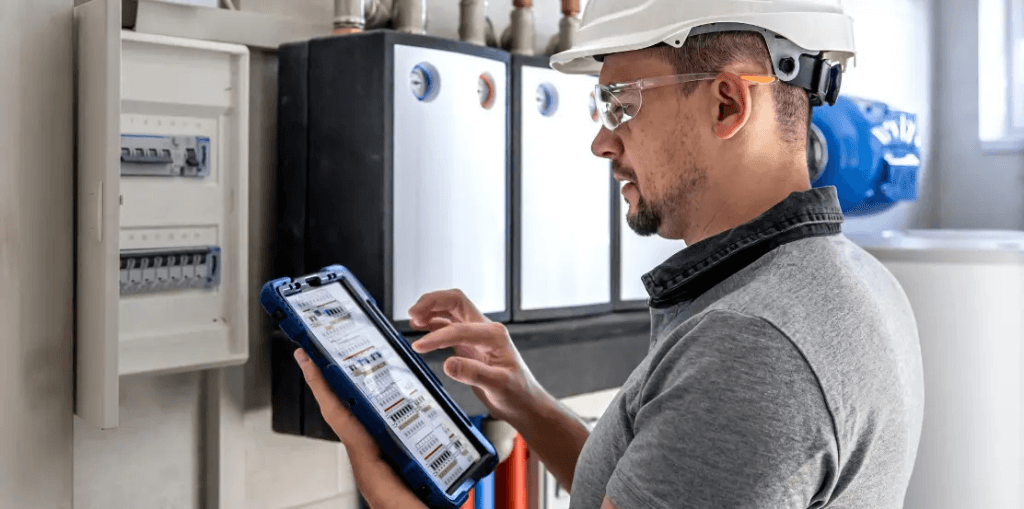
Whether you are preparing for a trip, organizing significant events, or assigning critical responsibilities to staff members in your company, checklists are an easy, uncomplicated approach to ensure that nothing is overlooked. Although utilizing paper checklists is acceptable, computerized checklists are a far better tool with several benefits over paper checklists. Using a straightforward workflow with knowledge-based smart checklists might help you operate more effectively and deliver better results.
A CMMS software solution can further enhance the effectiveness of checklists in maintenance management. It offers different functionalities and features to simplify checklist creation, tracking and management.
Here are some of the most common benefits of using an automated preventive maintenance checklist:
Customizable checklists: With CMMS, maintenance teams may design checklists that include detailed instructions, reference materials, and any required paperwork, all customized for particular maintenance operations. This guarantees that technicians have access to all the information they require to complete duties effectively and efficiently.
Automated scheduling and reminders: Preventive maintenance tasks can be scheduled with the help of CMMS, guaranteeing that they are carried out on a regular basis. The likelihood of technicians missing inspections is decreased when they have automated reminders and notifications to assist them.
Automated onboarding process: Smart checklists that are automated can make the onboarding process go more quickly. Onboarding checklists that contain all necessary duties including the task owner, due date, and priority can be created in advance. When a new joiner comes, all of their tasks are automatically allocated to the appropriate team members. You can also monitor their development and the state of the work.
Reduced errors: No matter how careful you are, you cannot ensure that your manual to-do lists are error-free. Every human being makes mistakes. On the other hand, you must continue to be accurate when finishing critical jobs. Automated checklists can help you in accomplishing your goals by removing as many mistakes as possible.
Summing Up To conclude, facility maintenance checklist or preventive maintenance checklist is a valuable tool for any organization or facility manager. It helps to streamline workflows, improve efficiency, and minimize errors. When combined with a CMMS, its usage is amplified.
Sclera is exactly the tool you need for this. It is a powerful platform that simplifies creating and managing equipment maintenance checklist. You can increase productivity, improve data gathering accuracy, and optimize maintenance operations with its user-friendly interface and extensive functionality. Give your team the freedom to conduct inspections, document findings, and generate reports seamlessly, ultimately boosting productivity.

