
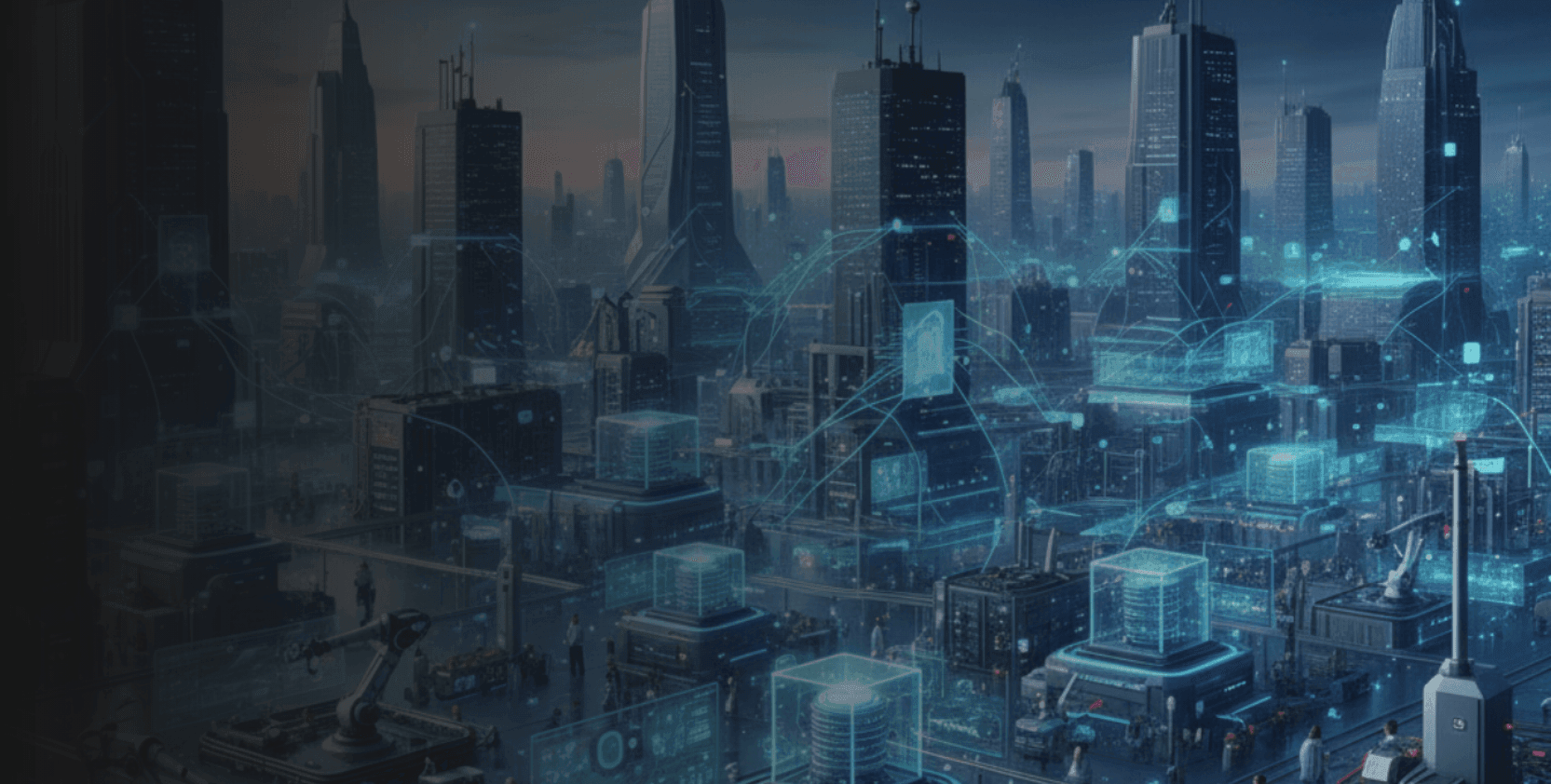
Latency poses a serious challenge when it comes to voluminous data. In an ever-evolving world, organizations are aiming for immediate action based on real-time data. Edge computing is one such distributed computing framework that processes information locally, unlocking unmatched speed, security, and efficiency in connected business operations.
Rather than a long round trip to a distant data center, this distributed computing framework brings processing power closer to where data is actually generated. In essence, organizations can have mini data centers right where they need them—be it on a factory floor, within a smart building, or at the base of a cell tower. This proximity allows data to be analyzed and acted upon almost instantly, fostering the next generation of intelligent systems.
The Power of Proximity in Edge Computing
At its core, edge computing is about location. By decentralizing processing power and moving it away from a central core to the "edge" of the network, we fundamentally change how data is managed. This approach directly tackles the limitations of traditional cloud computing, especially for applications that require immediate feedback. The benefits are transformative, touching everything from operational speed to data security.
Reducing Latency with Real-Time Edge Computing
The most significant advantage of bringing computation to the edge is the substantial reduction in latency. In many industries, even a delay of a few milliseconds can tip the scales between success and failure.
- Instantaneous Decision-Making: For applications like autonomous vehicles or robotic arms on an assembly line, real-time responses are non-negotiable. Real-time edge computing ensures that critical data is processed locally without the delay of a round-trip to the cloud. This allows machines to react instantly to their environment. - Bandwidth Conservation: The explosion of edge computing for IoT devices means billions of sensors are constantly generating data. Streaming all this information to the cloud would consume an enormous amount of bandwidth and be incredibly costly. It filters this data, sending only the most relevant insights to the cloud, thus optimizing network traffic.
Enhancing Security and Resilience
Moving data across a public network to a central cloud introduces security risks. Every point of transfer is a potential vulnerability. This distributed computing model minimizes these risks by keeping sensitive information local.
- Localized Data Processing: With edge data processing, much of the raw data never leaves the local site. For example, video footage from security cameras can be analyzed on-site for threat detection, with only the alerts being sent to a central security hub. This reduces the attack surface and protects private information. - Operational Continuity: What happens if the connection to the cloud is lost? For a cloud-dependent system, operations would grind to a halt. Edge devices, however, can continue to operate autonomously. A smart building, for instance, can keep managing its security systems even during a network outage, ensuring resilience and reliability.
Transformative Use Cases for Edge Computing
The theoretical benefits of this framework are already being realized across various industries. From factory floors to urban landscapes, moving intelligence to the edge is creating smarter, more efficient environments. This shift allows businesses to focus on next-generation innovation services.
Edge Computing in Manufacturing
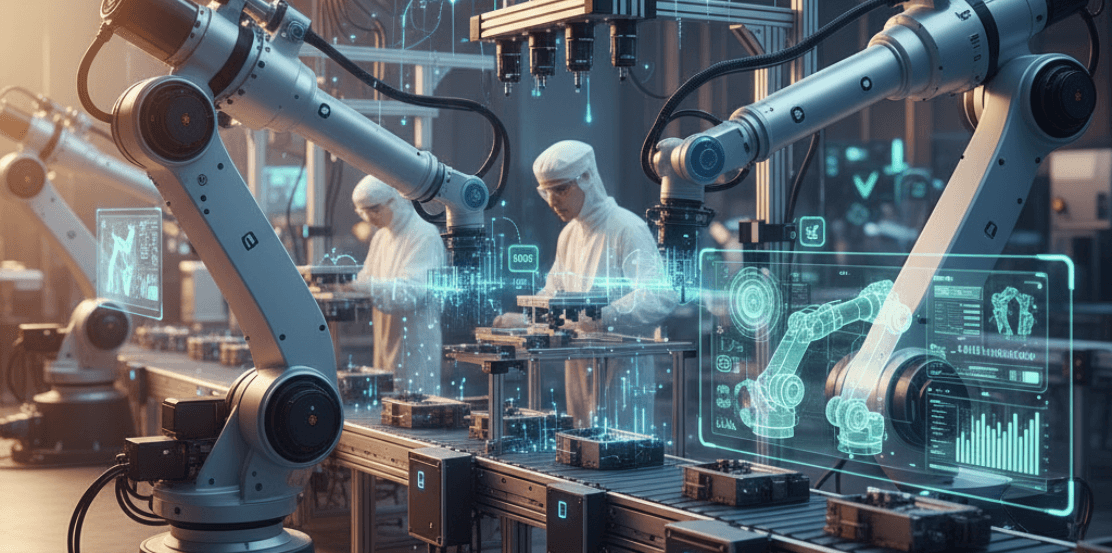 Smart factory floor with robotic arms and IoT sensors processing data locally at the edge, illustrating real-time predictive maintenance and quality control in modern manufacturing.
The modern factory is a complex ecosystem of machines, sensors, and robotics. Hence, this model in manufacturing is pivotal for creating the "smart factory."
- Predictive Maintenance: Sensors on industrial machinery can monitor vibrations, temperature, and performance in real time. An edge gateway can analyze this data instantly, predicting when a machine is likely to fail. This enables proactive maintenance scheduling, preventing costly downtime. - Quality Control: High-speed cameras on an assembly line can use edge-powered machine vision to inspect products for defects promptly. Defective items can be eliminated from the line immediately, improving product quality and reducing waste without slowing down production.
Data Centers and Smart Building Edge Computing
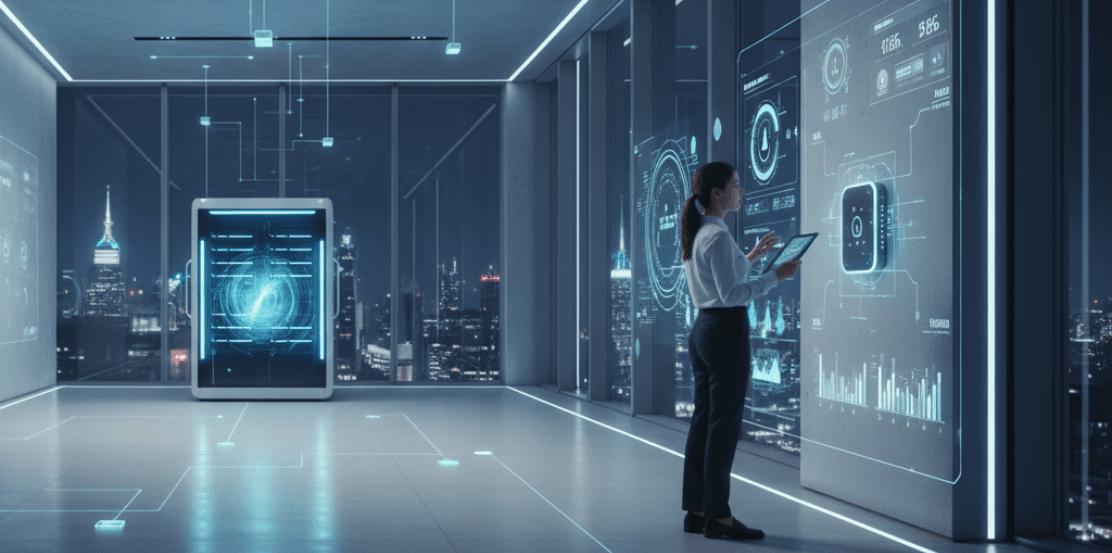 Modern smart building interior using edge nodes for intelligent automation, showing a professional interacting with digital overlays that manage connected operations and energy efficiency.
Even data centers, the heart of the cloud, are anchoring the edge. Furthermore, the concept is making our buildings more intelligent and efficient. - Data Center Optimization: Edge nodes within a data center can help manage server loads and cooling systems more efficiently, reducing energy consumption and improving performance. - Smart building edge computing: Modern buildings are filled with IoT sensors that control lighting, HVAC, and security. This distributed framework allows the building's management system to make real-time adjustments based on occupancy and environmental conditions. For example, it can dim lights in empty rooms or adjust the temperature based on the number of people in a conference hall, leading to significant energy savings and improved occupant comfort.
Edge computing stands apart in an increasingly data-driven world. By bringing computation closer to the source, it connects speed, security, and scalability—enabling real-time decision-making, operational resilience, and smarter infrastructure. From predictive maintenance on factory floors to intelligent automation in smart buildings, the edge is where true digital transformation begins.
At Sclera, our solutions integrate IT, OT, and IoT systems into a seamless ecosystem that accelerates insights, enhances performance, and drives sustainable innovation. With Sclera’s intelligent frameworks, organizations can build connected operations that are not just reactive—but predictive, proactive, and future-ready.

