

Futuristic buildings are rapidly changing and refuse to be defined with a warped vision of eye catchy, towering silicon structures with stunning architecture, at least after post-COVID times. The reason is more businesses are coming up with hybrid spaces to deal effectively with pandemic like situation. Also, there is an urgent need for commercial real estate spaces to stay relevant for all possible future challenges and stay sustainable in terms of cost, energy, and employees.
The pandemic of 2019 had overthrew many businesses and forced many to either shutdown or take refuge in remote jobs. There has been a constant urge to adopt hybrid work model and find technological ways to address the situation. Even though COVID waves seem to have calmed down, most of the employees still prefer work from home (WFH) option as it has been proven a success in situations like pandemics, lockdowns, and layoffs. The result, office buildings have more empty work spaces and an increased number of people doing remote jobs.
So what will be the future of these office buildings? How can businesses make better use of their office buildings? Let us take stock of the things happening worldwide in commercial real estate.
Remarkable decrease in office occupancy
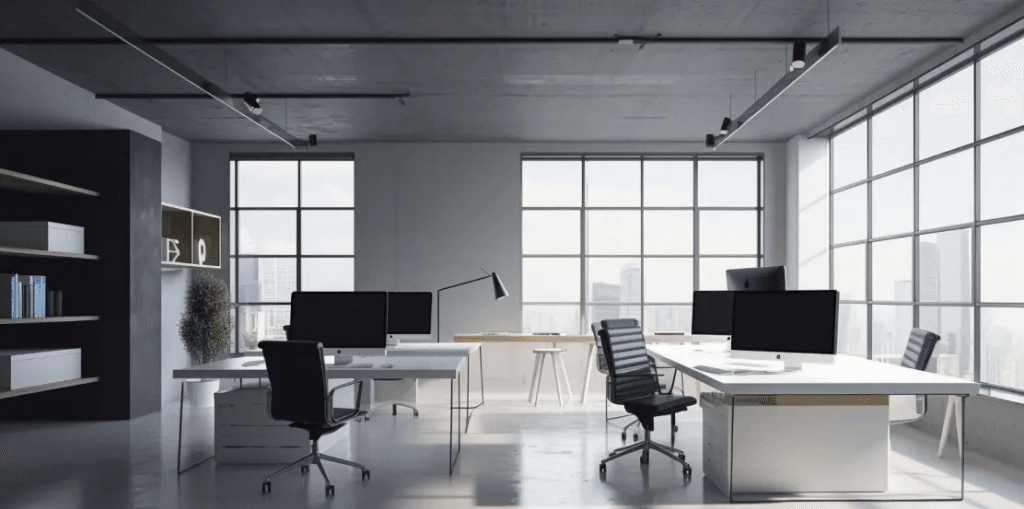
Everything is not the same with real estate workspaces, especially after COVID. There is a record 30-year dip of 17.1% in office occupancy rates which can be attributed to increasing remote work. Commercial real estate businesses are striving hard to make their spaces optimized and profitable for themselves as well as the occupants.
Boom in remote workspaces
As per a finding in 2023, the number of Americans doing remote jobs has quadrupled over three years starting from 6% in 2018, and was projected to hit a 36.2 million mark by 2025. Employees feel more in command over how their personal life is spent and professional life is managed.
Optimized productivity, improved life
While 75% of the employees are of the opinion that remote work has improved work - life balance, 32.2% of managers revealed that the productivity increased after the work shifted to remote mode. Hence more businesses are encouraged to give employees with a choice of opting for WFH and still get best deal for both the employees and themselves.
Demand for efficient workspaces
Commercial office building that is efficient with required amenities is in demand, and those lacking them are ignored. Rising prices of commercial real estate are forcing businesses to rethink about investing in commercial spaces. Having a smaller space and using remote work models or an optimized commercial and office building with cost and energy savings seem attractive ways out for businesses.
Financial crisis
Remote working, despite being an advantage for employees and employers, affected other businesses who were coexisting in those locations. Retailers who catered to the employees' needs suffered financial set back, while the transportation fleets suffered a whopping loss of $2.4 billion.
Environmental sustainability
With discussions on climate change becoming the hot topic around the world, meeting environmental and social sustainability standards is also a high priority for occupants and real estate businesses. Converting the existing commercial and office building to the set standards is easier than constructing a new building to match the standards.
Building of the Future: 7 Effective Ways to Make it Hybrid
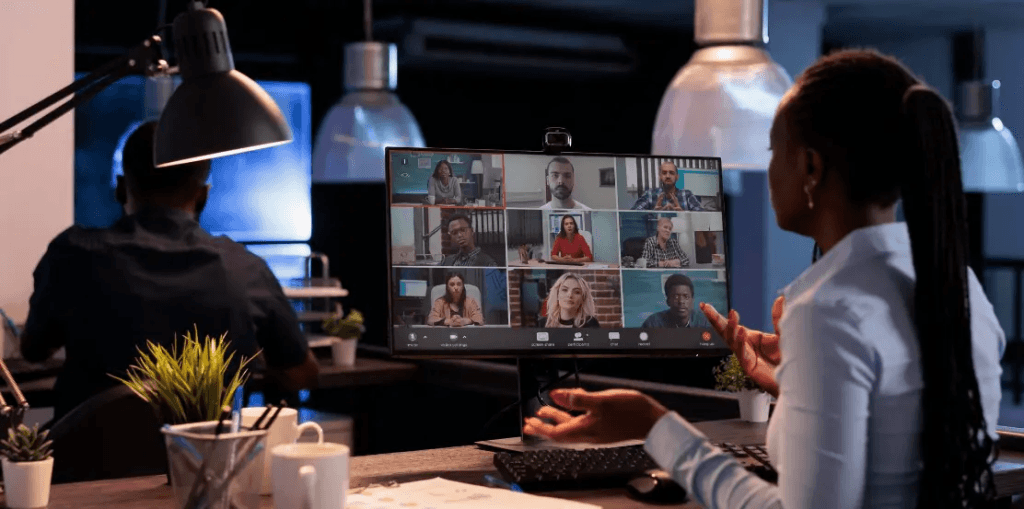 Building of the Future as perceived by the world earlier hardly experienced major transformations until the wave of pandemic challenged the irrelevance. Remote working which was only meant for unavoidable circumstances became the primary means of getting things done. The brainstorming sessions that needed more background preparation and presentations scaled down into small laptop screens, further adding limitations to the communications. So there is a huge need for businesses to reimagine how they are managing their operations.
Retracing roots and future-proof building services
The pandemic has posed a challenge to the values and culture of the organizations. Brief face-to-face communications that used to happen directly during the COVID times shifted to digital interactions. Reconnecting to the business roots and reviving the culture and community remains the sustainable goal to be achieved.
Converting your office
Commercial office building conversions in the USA are happening either due to low occupancy or because the buildings are old with most of them being over 80 years. They are repurposed for projects such as environmental sustainability and mixed uses like retail, life sciences, residential and others.
Diversifying building usage
A commercial office building can be repurposed if its amenities are outdated or portions do not suit the needs of offices. Generally such portions are repurposed for projects such as retail, life sciences, residential, etc.
Taking work to people
Businesses long had a standard requirement for people to relocate physically to their places for work, but now they are open to take the work to where people live. Now employees have a range of options available, such as fully remote, hybrid remote, hybrid remote with exception, and on site.
Redesigning to support organizational priorities
While more employees prefer working remotely rather than commuting daily to the office, businesses are looking for ways to use workspace smartly and reducing office space. Plus, they have to keep the workspaces flexible enough to accommodate the diverse working needs of the employees and avoid falling back to the pre-pandemic work structures. This look-ahead approach is also going to prepare them to brace up for the future and redesign their workplaces.
Getting a smaller workplace
On the contrary to these, businesses may plan to relocate their offices to where their workforce exists. Some may like to move to big cities for suitable talent, while some others may shift to suburban locations. You may plan of bring down the employees' office time to around 10% and extend WFH to around 25%.
Changing how you manage your workspace
Technological solutions such as automation and facility management technology can be effectively used to automate the tasks for which the direct presence of employees is not required. Thus, large workspaces can be easily managed with simple digital handheld devices and the workforce can be utilized for other important tasks.
Advantages of futuristic buildings
Demolishing an entire building and constructing futuristic buildings with modern amenities is the way if you have sound financial backing. If not, converting the existing building for viable purposes is the least expensive decision you can make. It can be less time-consuming as you avoid time-consuming procedures involving approvals, and also leave low impact on the environment.

