

Inventory management is the process of efficiently overseeing the raw materials of the business from ordering, storing, utilizing, and selling. This involves having the right inventory at the right time with the right quantity and cost. Inventory management is a part of supply chain management and helps businesses to optimize the overall flow of raw materials while reducing the carrying cost and making sure the inventory is available when needed.
Effective inventory planning is essential for firms to satisfy customer demand, minimize holding costs (storage, insurance, etc.), lower the risk of product obsolescence, and maximize working capital. To manage the proper amount of inventory and preventing overstocking or understocking problems, also entails putting various tactics and technologies into practice.
Below we explore the major benefits of inventory management, types of inventory planning methods, and software in trend.
Benefits of inventory management for businesses
Saves money: Tracking the inventory will make it easy for you to determine when and how much raw material is needed. This way, businesses can save money on unnecessary inventory and avoid obsolescence while maintaining the cash flow of the business.
Customer satisfaction: Inventory tracking means businesses can never go out of stock and the customer will be served good service. When the demands of the customers are met without delay, they are satisfied and stay loyal to the brand.
Understanding profitability: Recording the inventory data in a system can help you in breaking down the purchasing and selling costs. This way, you can easily ascertain the overall value of the stock and the lucrativeness at the business level.
Reduced wastage and improved cash flow: Inventory planning leads to minimized wastage and obsolescence by timely use of the materials. It also helps in improving the cash flow as there is less carrying cost, and the working capital can be used elsewhere.
Data-driven decision-making: With accurate inventory data in hand, insights into sales trends allow businesses to make decisions regarding procurement, sales, and marketing strategies effectively.
Types of inventory management
Inventory management uses distinct methodologies based on the business type or the type of inventory used. It is essential to keep the right amount of goods in hand to fulfill customer needs and operate profitably. It can be particularly complex when businesses have numerous stock units spanning multiple warehouses.
Below is an explanation of the top 5 inventory management methods that are most used by organizations.
1) Just-in-Time Management (JIT) This method was developed in Japan in the 1960s and 1970s. It focuses on keeping the right quantity of raw material required at a particular time. This stock control method enables businesses to reduce cost and wastage by keeping only the inventory that is required to produce and sell products.
Though the method helps in a significant reduction of storage costs and wastage, it can be a bottleneck if there is a sudden spike in demand. It is better suited for organizations that have high order volume or businesses that require a continuous supply of inventory. The method requires good coordination with suppliers, which is challenging as well as essential to keep the production flow and meet customer demand.
2) Materials Requirement Planning (MRP) This method is sales forecast dependent. Meaning, that businesses must have an accurate sales forecast to calculate the inventory needed to produce goods and to communicate it with the suppliers on time. This method of inventory tracking is suitable for companies with complex manufacturing processes.
MRP inventory tracking method allows for planning and organizing the production efficiently while making sure that the raw materials are available on time to meet the sales demand. This way, the workers can estimate how much time is needed in which step of production so that delays are prevented and output is increased.

3) Economic Order Quantity (EEOQ) This model of warehouse management strategy calculates the number of units that need to be added to the inventory with each batch. It reduces the total cost while keeping up with consumer demand. The cost of inventory here implies holding and setup costs. The EOQ inventory tracking strategy ensures that only the needed amount of raw material is ordered for every batch.
This makes sure that there are no frequent orders by a company and no excess inventory on hand. When the holding costs and set-up costs are reduced, it automatically reduces the total inventory cost for the firm.
4) ABC Analysis Also known as 'Always Better Control', this warehouse management strategy categorizes items into three categories based on price. The categories are then separated into three groups A, B, and C, and ranked based on demand, cost, and risk data. Class A items are the most important and class C items are the least important based on sales and profitability.
This method of inventory tracking helps in efficient resource allocation and improved inventory forecasting. The disadvantage here is the time and effort needed to categorize items and apply this model to the supply chain.
5) Day Sales of Inventory (DSI) This is a financial ratio that shows how long it typically takes a business to convert its inventory, including work in progress, into sales. There are several methods to interpret days sales in inventory (DSI), which is also referred to as the average age of inventory, days inventory outstanding (DIO), days in inventory (DII), and days inventory.
DSI indicates the liquidity of the inventory and the number of days the company's existing inventory will last. Though the average DSI differs from industry to industry, a lower DSI is generally desirable as it signifies a quicker duration to clear the inventory.
Top 5 Inventory Management Software and Their Benefits
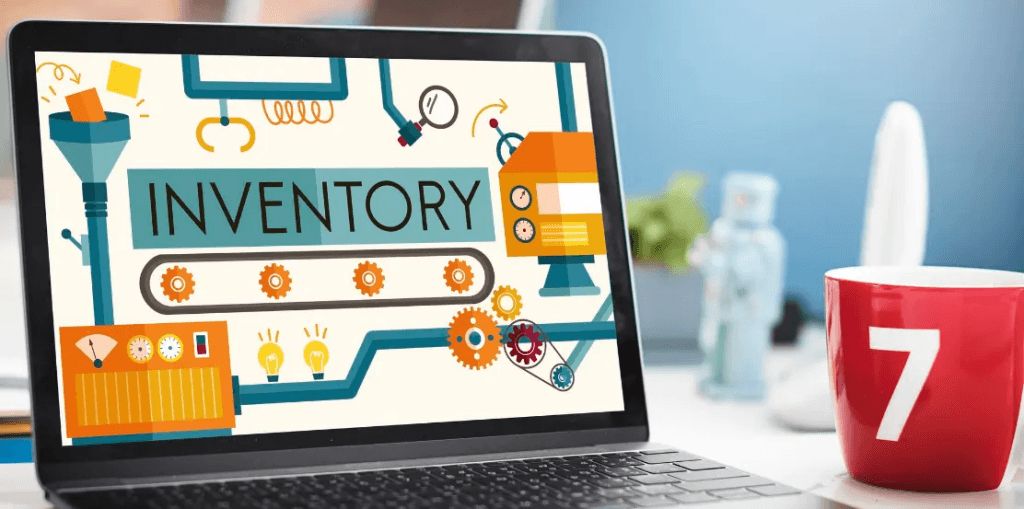 Inventory tracking may not be a glamorous task but it is an imperative one for businesses.
Having the right inventory management software that suits your business is significant for easier inventory tracking and stock control.
Inventory management software is a tool that gives you a clear picture of your stock levels, lets you order when required, connect to other sales channels, and automate several inventory management tasks. These inventory tracking software help you track your stock level and let you decide what step to take next. Below are the top five inventory management software that are preferred for businesses.
1. NetSuite
NetSuite is a cloud-based all-in-one enterprise resource planning system that includes asset tracking as one of its core features. It is ideal for businesses of all shapes and sizes. It integrates various business operations and comes with features such as multilingual support, revenue recognition, retail warehouse management, forecasting, multi-warehouse support, order management, supply chain management, and many more.
2. Zoho Inventory
This is also considered one of the best asset-tracking software currently in the marketplace. Zoho inventory is tightly unified with other apps in the suite. For small to medium-sized enterprises, it is a comprehensive tool featuring order administration, inventory tracking, and report generation. It can also be used for creating sales orders and invoices and features multi-channel support for online shopping platforms, order fulfillment with consolidation for 40+ shipping carriers, CRM software, drop shipping option, Android/iOS support, etc.
3. Ecomdash
The multi-channel inventory management software, ecomdash is a rather straightforward cloud-based program that allows you to manage inventory, orders, and shipments from a single panel. It's the ideal choice for inventories that are small to medium-sized. Using ecomdash, managing several inventories is simple. Featuring, but not limited to, multichannel asset tracking, fulfillment by Amazon (FBA) management, order fulfillment with real-time shipping rates and label printing, set custom alerts, bundles and multi-pack listing, etc.
4. Fishbowl
This is an ideal asset-tracking software for budding brands and enterprise customers. It effortlessly integrates with Quickbooks for better stock control. The main purpose of this software is inventory automation. It was created to offer manufacturers, wholesalers, and distributors comprehensive inventory tracking and management of orders. It features multi-channel inventory syncing, centered inventory database, forecasting, stock history coverage, inventory costing and tracking, barcode support, etc.
5. Cin7
This is one of the best warehouse management software with inventory-specific features. Cin7 easily integrates with POS systems, online sales channels, and third-party collaborations to offer a comprehensive inventory interface. With Cin7, order processing is made more effective as this automated inventory platform syncs online and physical channels. It is ideal for both small and large businesses and features inventory planning, pre-order/back-order management, built-in B2B functionality, real-time reporting, custom inventory fields, etc.
Benefits of Automated Inventory Management Software
Here are some of the major benefits businesses can have after adopting automated inventory management software that focuses on performance:
- Access to real-time data
- Decreased manual errors
- More efficiency
- Improved sales tracking and prediction
- Supports customer and vendor relationships
- Enables scaling and increased profits
- Decrease in inventory holding and wastage costs
In conclusion, managing the inventory and stock levels helps commercial enterprises in tracking and controlling their inventory levels, ordering, and utilizing resources efficiently. In addition, the inventory management system enables automation of inventory tracking tasks, real-time stock updates, lowering of costs, and enhanced customer satisfaction, which leads to scaling of profitability.

