
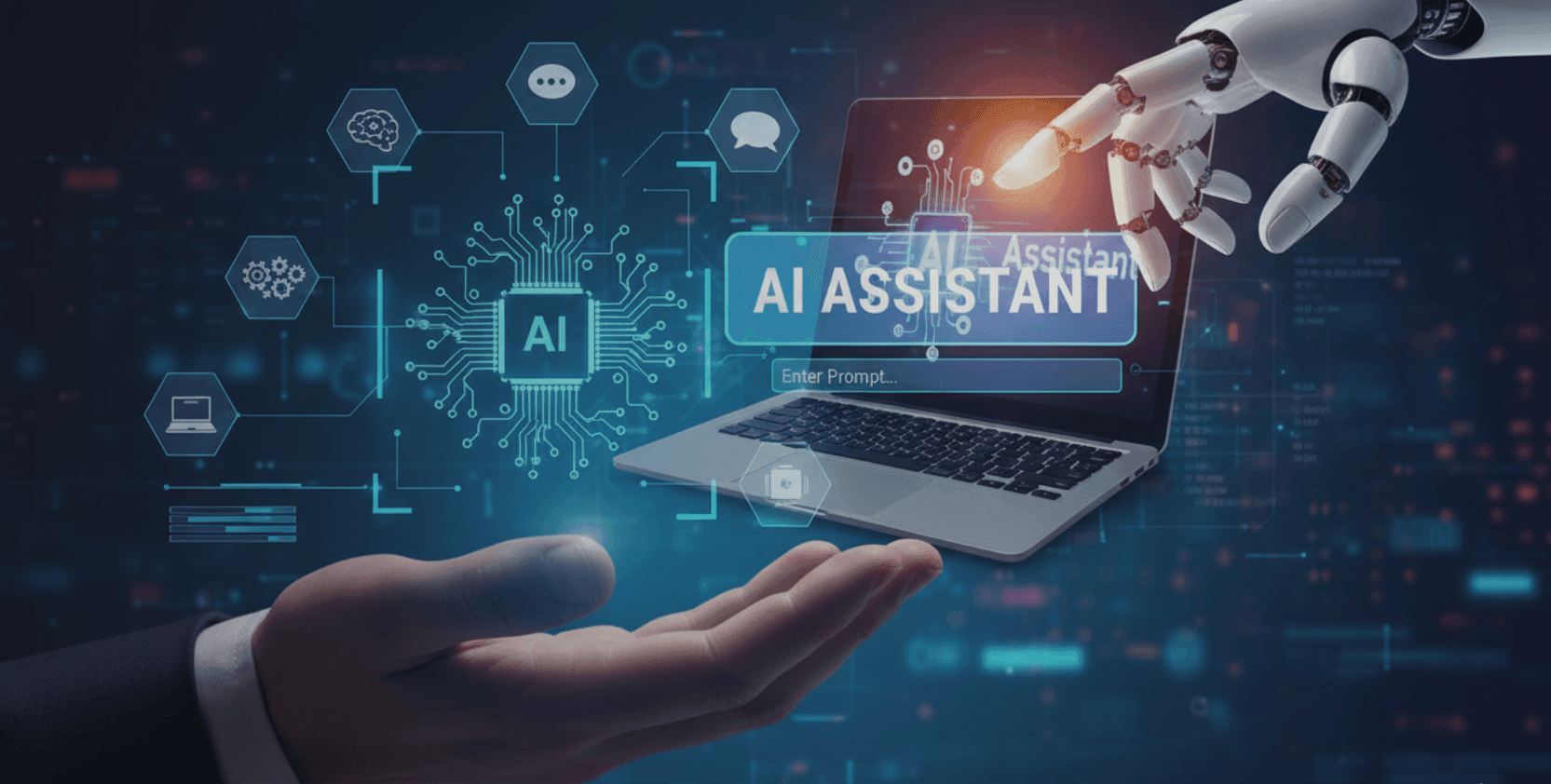
Progress through productivity—organizations are seeking effective collaboration through automation. Artificial Intelligence (AI) copilots, or assistants, enhance human expertise, providing personalized experiences. Today, AI platforms can predict system failures, ensuring frontline workers receive step-by-step guidance to resolve and prevent future challenges using Generative Artificial Intelligence (GenAI). This evolution marks a significant shift from reactive maintenance to a proactive, predictive, and refined operational model.
An AI assistant acts as a partner, filtering through vast amounts of data from sensors, maintenance logs, and operational histories to identify patterns invisible to the human eye. This capability is especially critical in industries with large and complex asset portfolios, such as manufacturing, energy, and logistics. By leveraging these valuable insights, companies can minimize unplanned downtime, evading hefty costs. The integration of this technology into daily workflows is a necessity for operational efficiency.
The rise of generative AI has further accelerated this shift, enabling these systems to do more than just analyze data. They can now generate comprehensive work orders, create detailed troubleshooting guides, and even simulate potential failure scenarios to train new technicians. As AI for business becomes more accessible, its application in asset management is proving to be one of the most impactful. This move towards intelligent operations is paving the way for a more resilient and structured industrial landscape.
How AI Copilot Transforms Everyday Asset Maintenance
The practical application of an AI Copilot in asset management moves beyond theory into tangible operational improvements. These systems are designed to integrate seamlessly into existing workflows, elevating the skills of technicians and operators on the ground. By processing real-time data from IoT devices and historical performance records, an AI assistant can predict potential equipment failures with remarkable accuracy. This predictive power allows teams to shift from a costly reactive maintenance schedule to a proactive one, scheduling repairs before a breakdown occurs.
This proactive approach is essential for smart asset lifecycle management. By intervening early, organizations can extend the lifespan of their machinery, reduce capital expenditures on replacements, and ensure consistent operational uptime. Furthermore, the Power AI behind these systems can analyze the root causes of recurring concerns, offering long-term solutions instead of temporary fixes. This deep analytical capability helps optimize maintenance strategies and resource allocation across the entire organization.
AI Copilot: Turning error detection into guided action
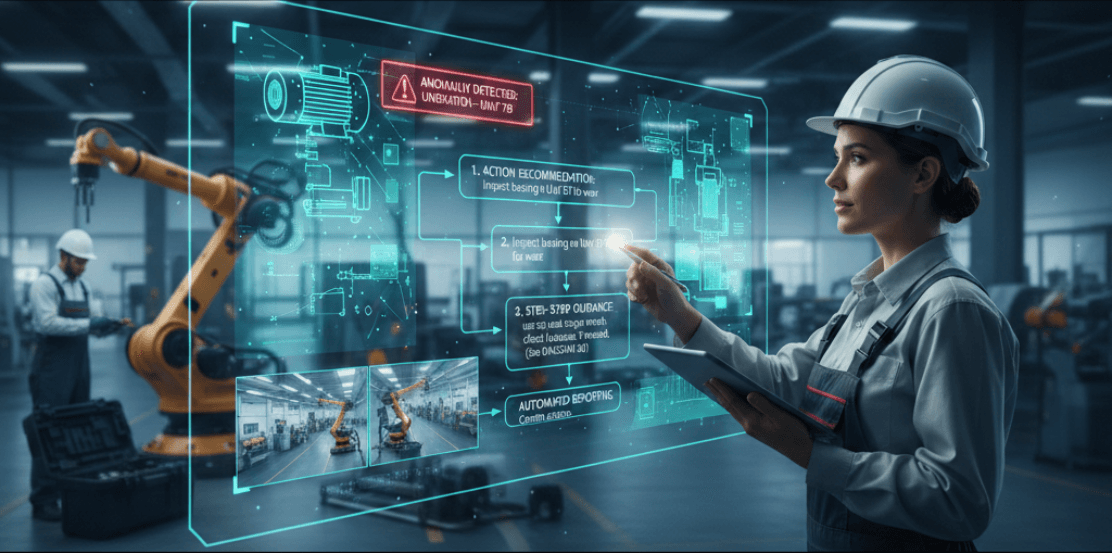 An engineer using an AI Copilot to detect equipment anomalies and receive real-time action recommendations through an augmented industrial dashboard on the factory floor.
An advanced AI Copilot does more than just flag potential problems; it provides clear, actionable recommendations. When a potential fault is detected, the system can guide a technician through the entire troubleshooting process. This guidance can come in various forms, making it highly effective for both seasoned experts and newer recruits.
Here’s how it works: • Issue identification: The system flags an anomaly, such as an unusual vibration pattern in a motor or a temperature spike in a hydraulic system. • Action recommendation: It suggests a specific course of action, like "Inspect bearing on Unit 7B for wear" or "Check coolant levels in the primary cooling circuit." • Step-by-step guidance: For more complex tasks, the AI assistant can generate a detailed workflow, complete with necessary tools, safety precautions, and diagrams. This is where generative AI transcends, creating customized instructions on the fly. • Automated reporting: Once the work is complete, the technician can confirm the actions taken, and the system automatically updates maintenance logs, creating a perfect record for future analysis.
This guided approach minimizes human error, reduces repair times, and ensures that best practices are followed consistently. It empowers technicians to work more efficiently and confidently, even when faced with unfamiliar or complex equipment issues. This level of support is invaluable for businesses looking to enhance their operational capabilities.
Sclera: Your operational AI Copilot for asset lifecycle management
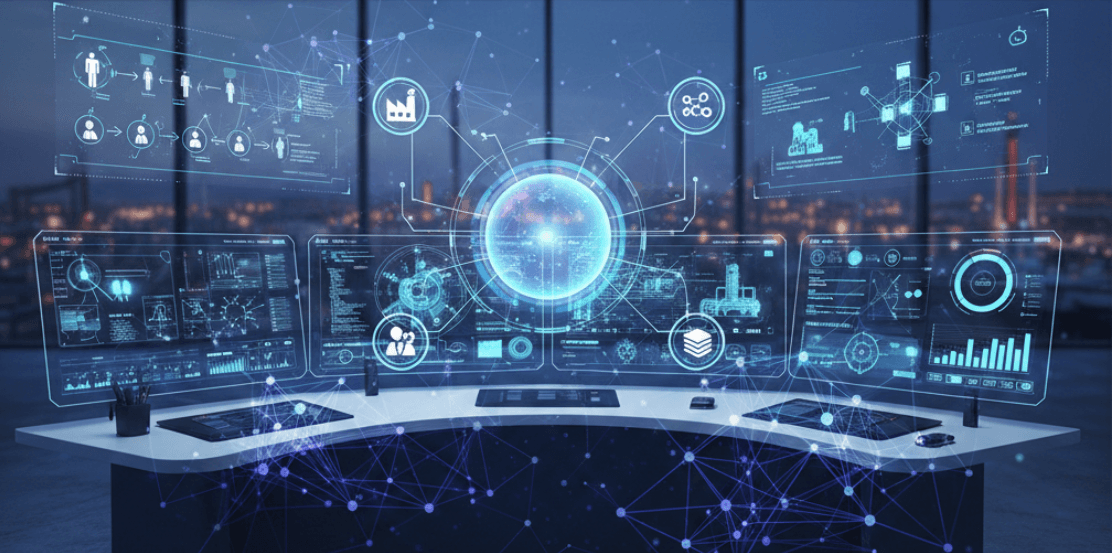 AI Copilot is powering a centralized control room with holographic analytics screens for operational monitoring, decision-making, and predictive asset management.
Pioneering this technological shift is Sclera, an intelligent workflow platform that embodies the principles of an operational AI Copilot. Sclera is specifically designed for teams managing large and complex asset portfolios, translating massive data streams into clear, actionable intelligence. It functions as a central hub where data from diverse sources—Supervisory Control and Data Acquisition (SCADA) systems, IoT sensors, and ERPs—is unified and analyzed to drive smart asset lifecycle management.
Sclera’s platform excels by not just presenting data but by orchestrating the entire operational response. When an issue is detected, Sclera's intelligent workflows automatically trigger the right procedures, assign tasks to the appropriate personnel, and provide them with the exact information needed to resolve the situation. This powerful application of AI for business ensures that every alert is met with a swift and effective response, directly improving operational resilience and efficiency. By embedding this intelligence directly into the workflow, Sclera acts as a true partner to operations teams.
Steering towards a Human-Machine Collaborative Future
We are progressing towards a future that is automation-driven and collaborative. The synergy between human expertise and machine intelligence, facilitated by an AI Copilot, represents a new frontier in industrial productivity. As AI platforms continue to adapt to evolving human needs, their ability to understand context, learn from interactions, and provide even more aligned support will grow. We can expect these systems to become more conversational and intuitive, promoting better human adoption.
The integration of generative AI will allow for the creation of dynamic training modules and simulations. Today’s workforce is a combination of experienced veteran technicians and upcoming prodigies. This way, personnel are empowered with powerful digital tools and the knowledge necessary to tackle the growing challenges of modern industry.
AI Copilot is a booming addition to innovation that comprises more than just technology. With work and schedules turning into hectic endeavours, AI assistants ease the burden of daily human activities. Companies like Sclera are highlighting the importance of harnessing the right Power AI tools to transform business operations. Professionals using Gen AI in asset management are equipped with the decision-making capacity to secure a competitive edge.

